How do you describe your own artistic practice?
At the core of my artistic practice lies a material-centred and experimental approach to textiles that expands from traditional garments and accessories to expansive works on canvas and in resin. My portfolio encompasses two-dimensional painting-like collages, three-dimensional assemblages, sculptures and installations. I perceive my creations as poetic and emotional reflections of the every-day, transforming mundane situations into moments of contemplation. Central to my work is an ongoing exploration of the transient nature of existence, as I engage in a continuous dialogue with the theme of crystallizing ephemeral moments. Through a synthesis of ephemeral and enduring materials, I endeavour to craft outcomes that possess an uncertain durability and value, prompting reflection on the fleeting yet profound essence of life itself.

Which question or theme is central in your work?
My work centers around the multifaceted realm of fashion, probing its essence and conceptual boundaries. Grounded in its ever-evolving nature, my work delves into themes of desire, addiction, and the nuanced construction of value.
I’m endlessly intrigued by the dynamic interplay of dressing and undressing, particularly the shift in perception as one transition from the public sphere to the intimate confines of home—a space I’ve identified as a potential haven from conventional fashion norms. This exploration prompts questions about the feeling of being dressed and the defining qualities of a garment. What evokes the sensation of being dressed? What transforms a piece of cloth into a garment?
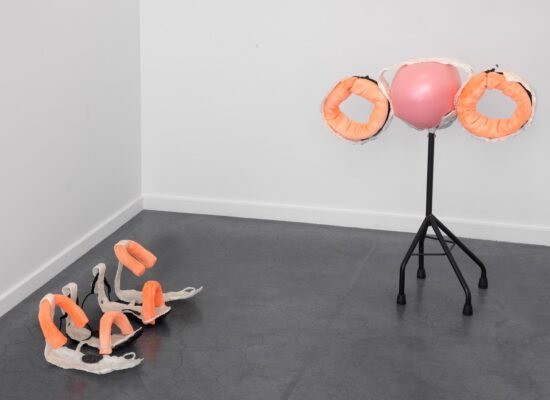
Through temporary sculptures, I engage with clothing detached from the body, accentuating the spatial dimensions and expressive potential of garments. Dressed objects both mimic and abstract familiar bodily shapes, expanding the perception of clothing as a medium for designing the body itself. The structures employ a diverse array of everyday objects, temporarily repurposing them and stripping away their conventional functions—exploring themes of body transformation, posthumanism, and the blurring of gender boundaries.

What was your first experience with art?
My earliest memories of engaging with art stem from my time in a kindergarten art and craft hobby class. Those after-hours sessions opened my mind to the potential inherent in everyday objects, such as crafting a turtle from a walnut shell. As I progressed into primary school, I enrolled in a children’s art school, which became the cornerstone of my artistic education. The curriculum was remarkably diverse, covering drawing, printmaking, sculpture, color theory, and even art history. We were encouraged to infuse our creations with narratives and emotions, imparting meaning and soul into our work. I consider these early nurturing experiences fundamental in fostering creativity.

What is your greatest source of inspiration?
As an artist, my greatest source of inspiration is the act of creating itself.
I’ve discovered that my ideas flourish and evolve as I immerse myself in the making processes. Engaging with diverse materials and experimenting with various techniques often leads me in unexpected directions, sparking new ideas and innovations. I believe that the act of making art is a journey of discovery, where materials have a way of guiding me towards fresh perspectives and inspiring new manifestations of my vision.

What do you need in order to create your work?
For me, stability is crucial. It provides a solid foundation for creative expression. A mind unburdened by constraints allows ideas to flow freely, nurtured by courage and curiosity to venture beyond the familiar. Creating from a place of love, devoid of fear, is essential to infuse passion and authenticity. I rely on a flow of concentration and intuition to guide me through the process, enabling me to make intuitive decisions and bring my artistic vision to life. I find comfort in the setup of my studio, in the presence of all the materials, objects and ideas I have collected over the years. It is a space where visions await their transformation into tangible form – in this sense, it is full of creative potential.

What work or artist has most recently surprised you?
Amidst the vast array of fascinating artists and exhibitions, blending diverse mediums and concepts, it’s often the simplest solutions that captivate the most. In moments of sensory overload, there’s a marvel in witnessing how a seemingly plain work can convey profound depths. Such was my recent experience encountering Yves Klein’s “Blue Monochrome”. Though not entirely surprising, the impact it had on me in that moment underscored the enduring influence of art. It stood as a beautiful testament to the transformative power of clarity, speaking volumes and echoing between the realms of nothingness and everything.