Lives in Paris, France and Lausanne, Switzerland
Website https://karlahiraldovoleau.com
How do you describe your own art practice?
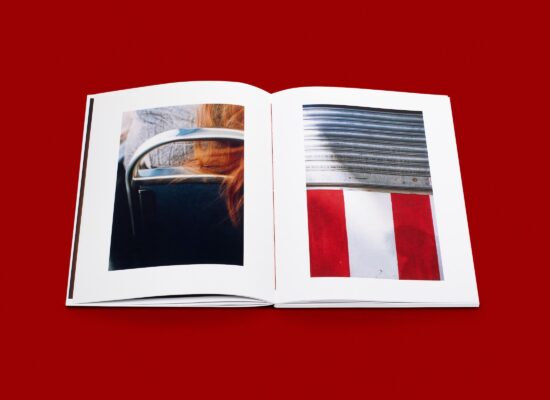
My work is full of stories. Through photography, writing and performance, I try to find the thin line that separates ‘real life’ and art.
I am often my own protagonist in my series, and this position makes the work deeply personal. I combine fictional, non-fictional and auto-fictional elements, while investigating the borders of the allowed in human interactions, love, sexuality, friendship.

Which question or theme is central in your work?
I like to depict and investigate real life relationships, document them and interpret them. My most recent solo show Another Love Story talks about a tragic breakup. One of my future projects talks about the love language as it’s used today by Gen Z. But I also explore identity and how you project yourself to others, like with a project titled A Man in Public Space, where I transformed into my male alter ego and performed in the street.

What was your first experience with art?
I am guessing my father’s music, he is a guitarist in the Dominican Republic, and obsessed with collecting music. His house was filled with instruments and probably 5 thousand CDs and vinyls, covering all the walls of the house. Everybody in my family has a slightly obsessive relationship to art, whether it’s music, drama, design, photography,… so I’m not surprised how I turned out.

What is your greatest source of inspiration?
Each project I develop comes organically, maybe from a conversation I had, heard, some experience I had. It can come from the people I love and so I want to photograph them a million times… Mostly from ordinary life.

What do you need in order to create your work?
Something to write on, any type of camera (a phone, a film camera, a DSLR…), but mostly time.

What work or artist has most recently surprised you?
I was blown away by the retrospective of Miriam Cahn I saw at Palais de Tokyo in Paris. Prior to the visit I also heard her talk about her process on the radio, and fell in love with her approach to art: she presents herself more as an artisan than as an “artist”, she works intensively with her sweat and hands, in her house in the mountains, and this grounded approach to such an oniric oeuvre was very inspiring.