How do you describe your own art practice?
Recently, I’ve been avoiding describing my work because it feels so personal and, honestly, a bit beyond me at times. Having an art practice is strange and often feels like it teeters on nonsense. I recently had this experience where I had so many studio visits one after the other. When speaking about my work, I felt I was a robot, just repeating the same sentences to different people. I did not like that. So when people ask me to describe what’s this or what’s that, I somewhat find it very awkward. I do things because my words can’t always express my thoughts, feelings, or ideas, so I turn to materials, forms, gestures, and spaces as another kind of language. Sometimes you don’t know why you do things, one does not always know why they created a song with one beat or another, but there’s always a thread pulling you towards it from the other side. My work reflects questions that come to me about memory, body, space, image, trace, and biography, using different mediums that happen to be at hand. These are things that I gravitate towards in quite a visceral way.
I do have a formal statement that provides an overview (it’s on my website), mainly because grants and institutions require something structured. And it’s wonderful when writers are able to accompany your work with their words. But I see a practice as something fluid that evolves constantly until the day we leave this world, and still, it will change with it. I’m wary of texts that dictate what an audience should think or feel or claim what the work achieves—it feels pretentious to me if said by the maker. I often feel clumsy trying to describe my own work, though I enjoy discussing art and sharing thoughts about what’s behind it. My thoughts shift over time, sometimes even contradicting themselves, which makes me think I might answer this question differently in the future.

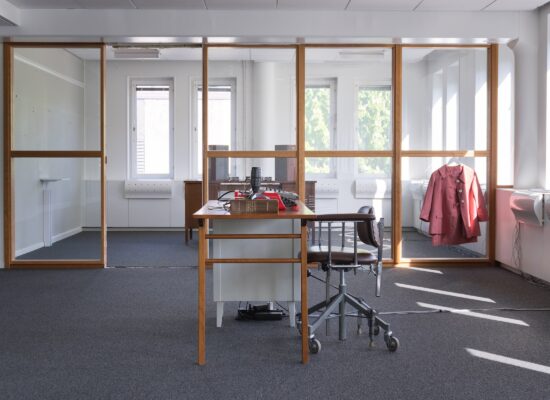
Photo: Andrea Rossetti
Which question or theme is central in your work?
I will list the first things that come to mind as a grocery shopping list: memory, body, space, trace, temporality, biography, disorientation, chance.

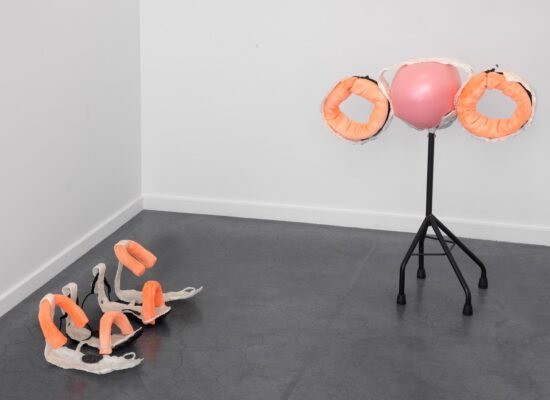
Photo: Nick Ash
What was your first experience with art?
I’ve been very fortunate to grow up with a father who, despite having a different job during my childhood, he’s always been an artist at heart. I observed him drawing, or making ceramics at different corners of the house, leaving a mess behind. This gave me some early and meaningful experiences with art. I vividly remember the artworks and posters in our living room, like gifts from his artist friends and a self-portrait he painted that scared me so much I avoided looking at it at night. I also spent hours browsing our bookshelves, especially publications on Goya, Picasso and Joan Miró, which left a lasting impression on me. We had reproductions of two Goya etchings from Los Caprichos, which also creeped me out as a kid. My experiences were simple but formative: observing my father work with clay in a studio he improvised in a tiny bathroom at home, visiting different local museums during primary school like Es Baluard or Fundació Juan March in Palma, and attending art workshops during the Summer at the Joan Miró Foundation in Mallorca when I was a child. Parents should never underestimate what these early experiences can have on kids.

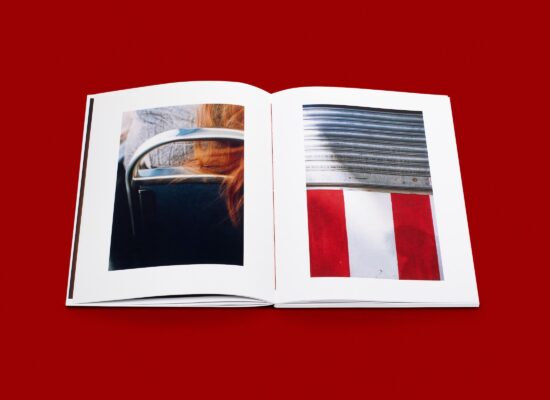
Photo: John Forest
What is your greatest source of inspiration?
Walking, looking, conversations, listening to other people, my parents, literature, stand-up comedy, politics, drums, skateboarding, cooking, staring at a wall, in-between moments, and warm showers.

Photo: Juan David Cortés
What do you need in order to create your work?
Most of all, spending time alone. I crave isolation when I work. And at the same time, it is important for me to be able to share my thoughts or impressions with someone who’s close and that I can trust. Otherwise you can turn crazy, too self-oriented and grotesque.

What work or artist has most recently surprised you?
I’ve been having a whole Phyllida Barlow moment. I’ve known her work for a while but I never went fully into it until the last two years, so she’s been a fairly recent discovery for me. Listening to how she talked about her art or about other artists is truly formidable. I recommend it to everyone. Also her book of her writings and lectures. It feels like talking one-to-one with the essence of making. Listening to other artists is one of the most fulfilling things for me.

Photo: Andrea Rossetti