How do you describe your own art practice?
I like to make spaces where people can enter and become part of the work. I often use cooking, shared meals, or installations to invite the audience to participate and experience the work together with me.
My projects usually start from something personal. They grow out of my own memories, emotions, and experiences, which I then transform into situations that others can enter and relate to. I’m interested in how simple everyday activities such as cooking, eating, or spending time together can create moments of connection and exchange between people.
Recently, my focus has been on immigrant communities. I am interested in how people understand their sense of self within a new social and political context. In particular, I look at how second-generation immigrants negotiate their identity, how they adapt to a new environment, and how they position themselves between different cultural and social expectations.

Food, Film and installation, exhibition at Royal Academy of Fine Arts Antwerp
Cinematography by Zheng min hong. Photography by Elvis Federico
Which question or theme is central in your work?
I left home when I was twelve to attend a Christian boarding school. Since then, I have not lived with my mother and my sister. I have often felt disconnected from my family. My parents divorced when I was one year old. I rarely speak with my father, and my mother was often not at home. Perhaps because of this, I have always had a strong desire to build a home of my own.
I see myself as someone in between. I do not fully belong in Europe, but I no longer completely belong in Taiwan either. Living as a migrant, I have realized that many people share this same feeling of being suspended between places, cultures, and emotional landscapes.
This in-between condition a space of uncertainty, negotiation, and longing has become a central interest in my work.

Food, Film and installation, exhibition at Royal Academy of Fine Arts Antwerp
Cinematography by Zheng min hong. Photography by Elvis Federico
What was your first experience with art?
My first experience with art comes from my childhood. My family owns a small temple in my hometown, and every year we took part in different rituals and ceremonies. The space around the temple was always full of ritual objects, decorations, bright colors, and symbolic images.
I was especially attracted to the visual elements: the paintings, patterns. These memories have had a strong influence on my work. They shape my interests and influence my artistic practice today.
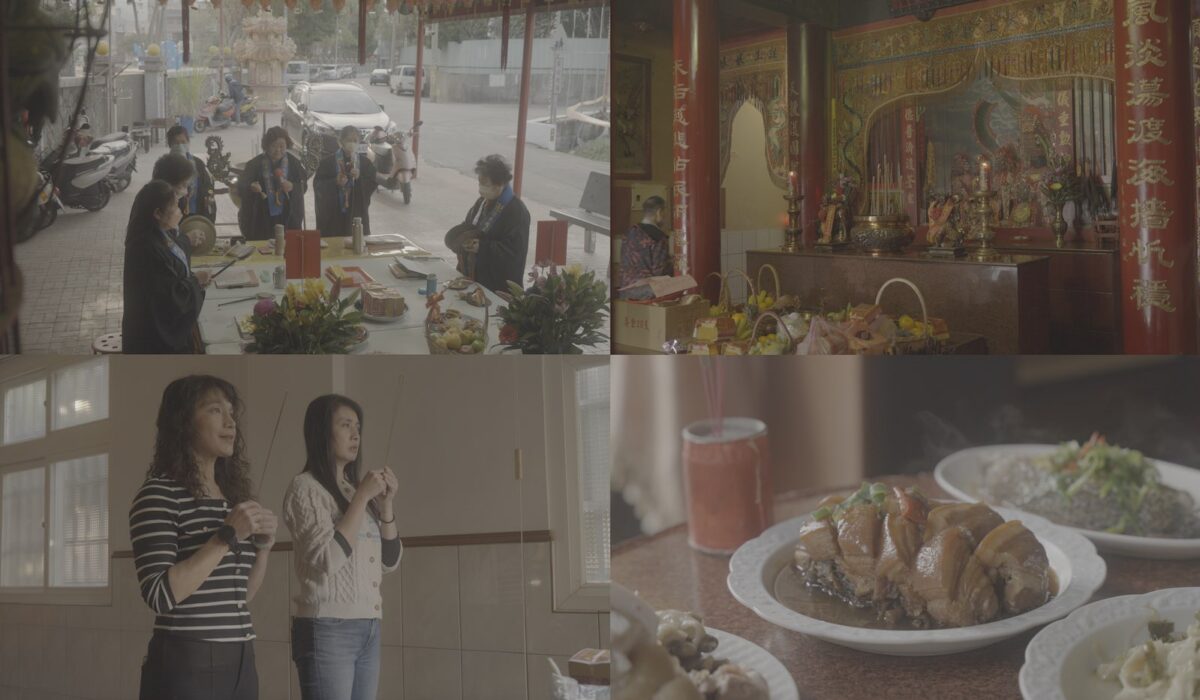
Food, Film and installation, exhibition at Royal Academy of Fine Arts Antwerp
Cinematography by Zheng min hong. Photography by Elvis Federico
What is your greatest source of inspiration?
I’ve realized that I am often inspired by the local environment, the space where I stay for a period of time. It is very important to my practice. I need time to build a strong connection with the environment, the people, and everyday life there.
Only after developing this connection, I feel ready to work. For me, inspiration comes from being present, observing daily routines, and slowly becoming familiar with the atmosphere of a place.
When I travel, I like to talk with local people and observe how families live and function. Seeing the care and relationships within different families also affects me deeply. In some ways, the sense of family love that I did not experience growing up becomes a source of reflection and inspiration for my work.

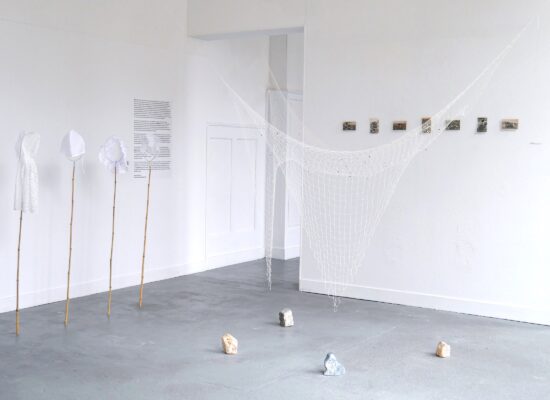
Food, Installation, exhibition at Het Bos, De Studio, Antwerp
Photography by Arseniy Litviniuk, Graphic design by Elseliina Peuranen
What do you need to create your work?
I need to be in a good mood and feel emotionally stable. I also need to spend a lot of time by myself, because solitude helps me think and reflect.
I’ve realized that staying in the same place for a longer period is very important for me. I need time to observe, experience the environment, and slowly build a connection with the place.

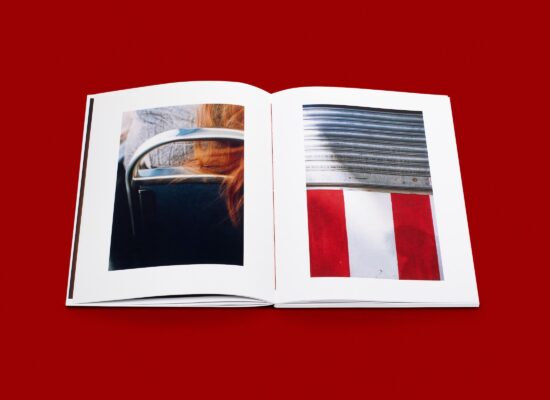
Publication
Graphic design by Elseliina Peuranen
Printed by RISO Print
What work or artist has most recently surprised you?
The work of Sammy Baloji surprised me recently. I saw his film at IFFR.
What stayed with me the most was how he used coffee as a symbol. When you entered the space, you could smell the coffee beans, which immediately connected to the history of coffee and its colonial and political background. I found this very strong and memorable.
I was also really impressed by the way the film talks about history while still showing the reality of Congo today. It didn’t feel like a heavy documentary, but more like a work that connects the past and the present.