How do you describe your own art practice?
I’m an artist that works with sculpture and installation mostly. I have an multidisciplinary background from which I draw a lot of inspiration for my current work.
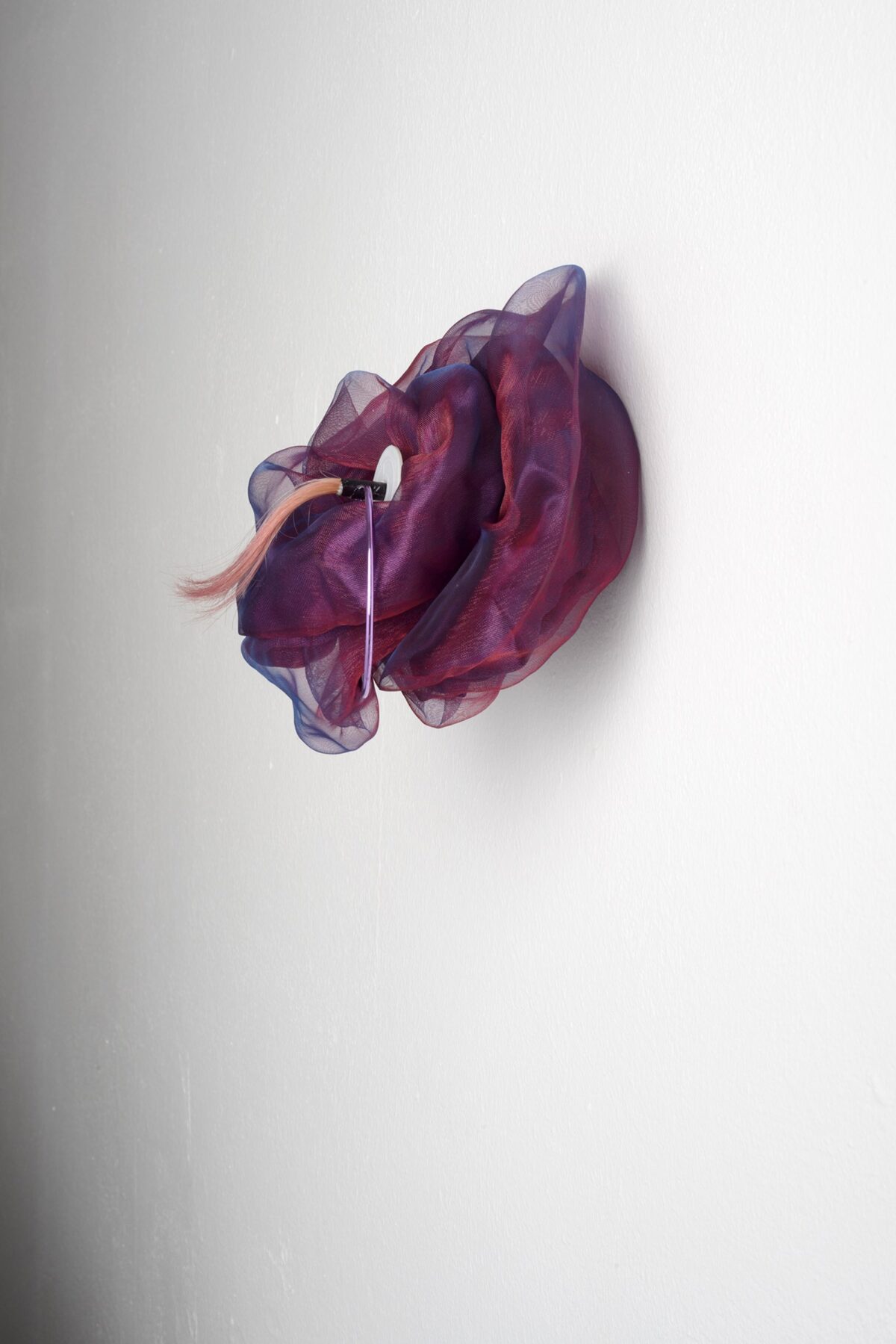
2023
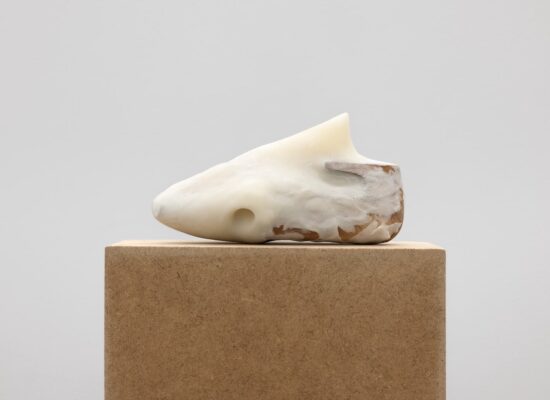
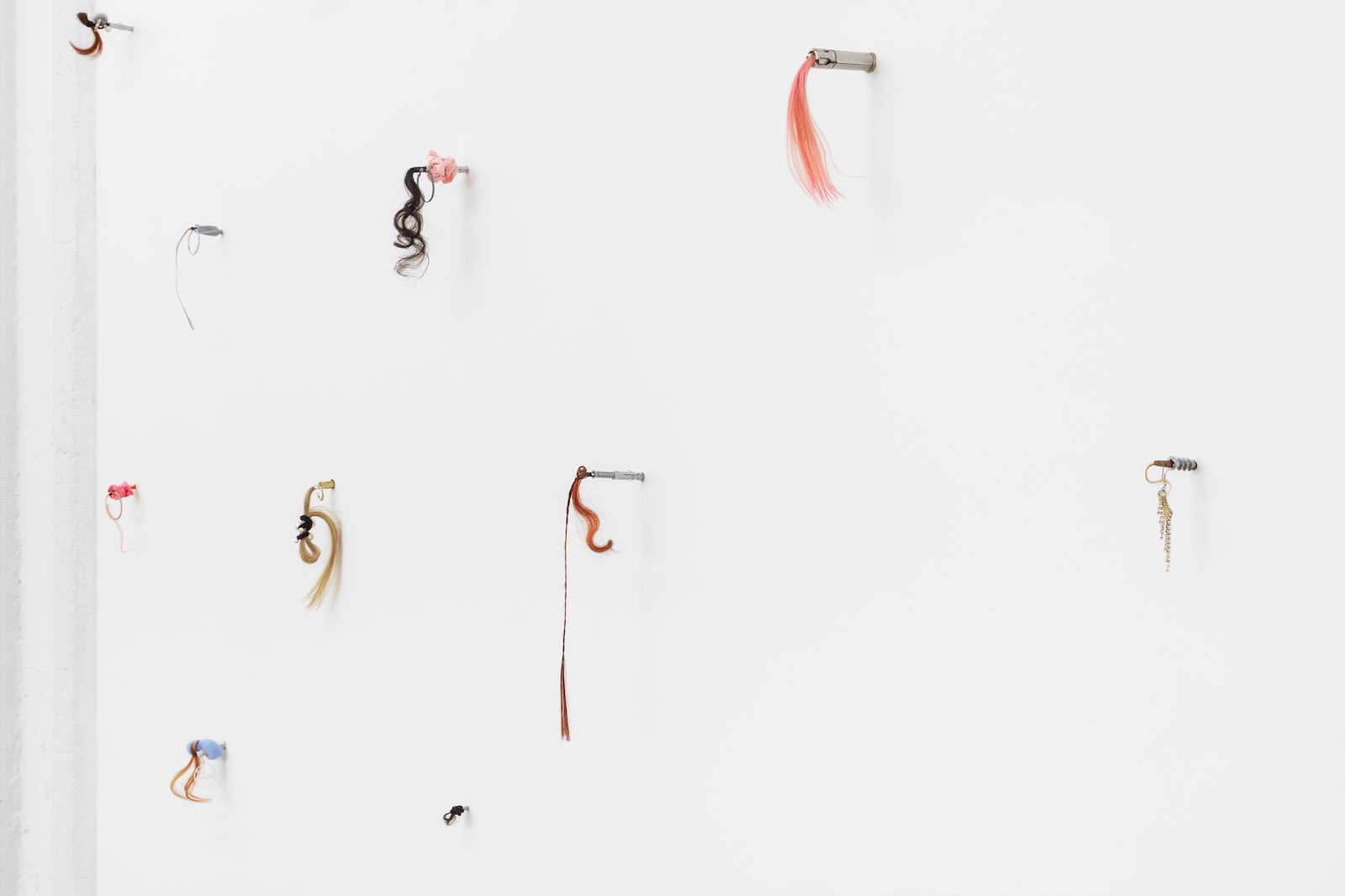
Grey self-drilling wall-plug S25 T40, black duct-tape, purple coloured hair, purple hair tie, purple earring
12,5 x 13 x 16 cm
Which question or theme is central in your work?
I often approach the normative female body as a site for exhibition and the exhibition space as a normative female body. I don’t want to advocate for binaries (at all!), but my research does focus on the fetishised and commodified normative young female bodies in Western neoliberal culture. I am fascinated by how desire is linked to commodities and I observe the movements that are set in motion because of this economy.
In my practice I see popular culture as the feminized Other to a modernist „high culture”. Something which is rejected and seen as frivolous, emotional and unnecessary. I’m interested in the similarities between looking at art and looking at women. The women in commercial popular culture and West-European art history are often reduced to surfaces, displays or presentation models, in function to please and sell.
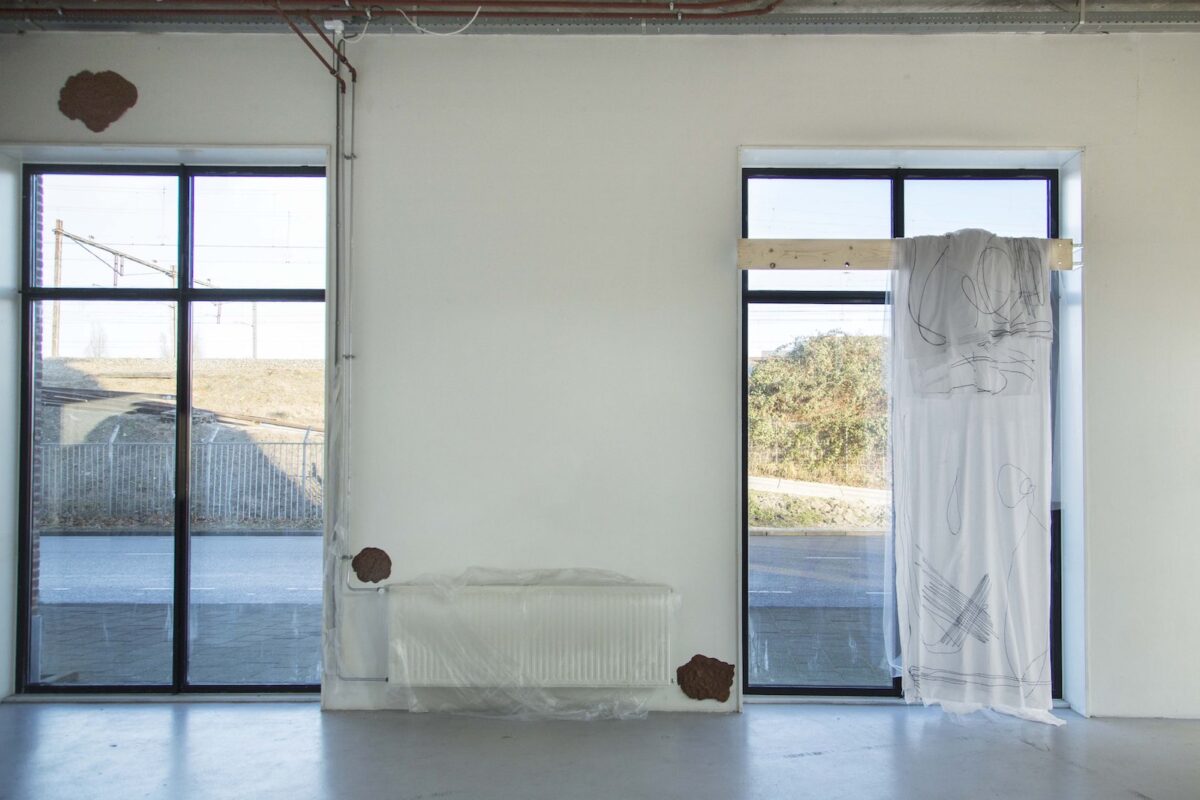
2017
My Wicked Tongue
Textile, waterproof marker, wood, hooks
350 x 240 x 30 cm
Birthmarks
Paper maché, coloured latex
Vary
In situ; different sorts of plastic wrappings that I used to transport the sculptures
What was your first experience with art?
Art has always been very present in my upbringing because I grew up with artistic parents, most of their friends and our other family members were/are artists or (graphic, fashion and furniture) designers.
My mother had a studio at home where she produced her sculptures and installations. I was in her studio almost daily and absorbed whatever was going on in there. When I got a bit older I even assisted her in the production of some of her exhibitions with larger sculptural work. This gave me access to knowledge of material and technique way before I started my studies at the art school.
We used to go to Germany a lot and we would always visit a lot of exhibitions. I remember being bored and puzzled as a child in this sterile and controlled white cube context. Perhaps I don’t have very vivid memories of what we saw most of the time, but one time I saw a work by Hans Schabus which I remember very well. It was a very big metal chain tied around the exhibition walls and breaking them. This was something I had not seen in other exhibitions before and it impressed me, I remember I liked it very much and wanted to see more of that kind of work.
I also remember seeing the work of Isa Genzken for the first time, I liked very much how alive and how physical it was. I experienced a lot of joy looking at it and imagined her experiencing a lot of joy while making it.
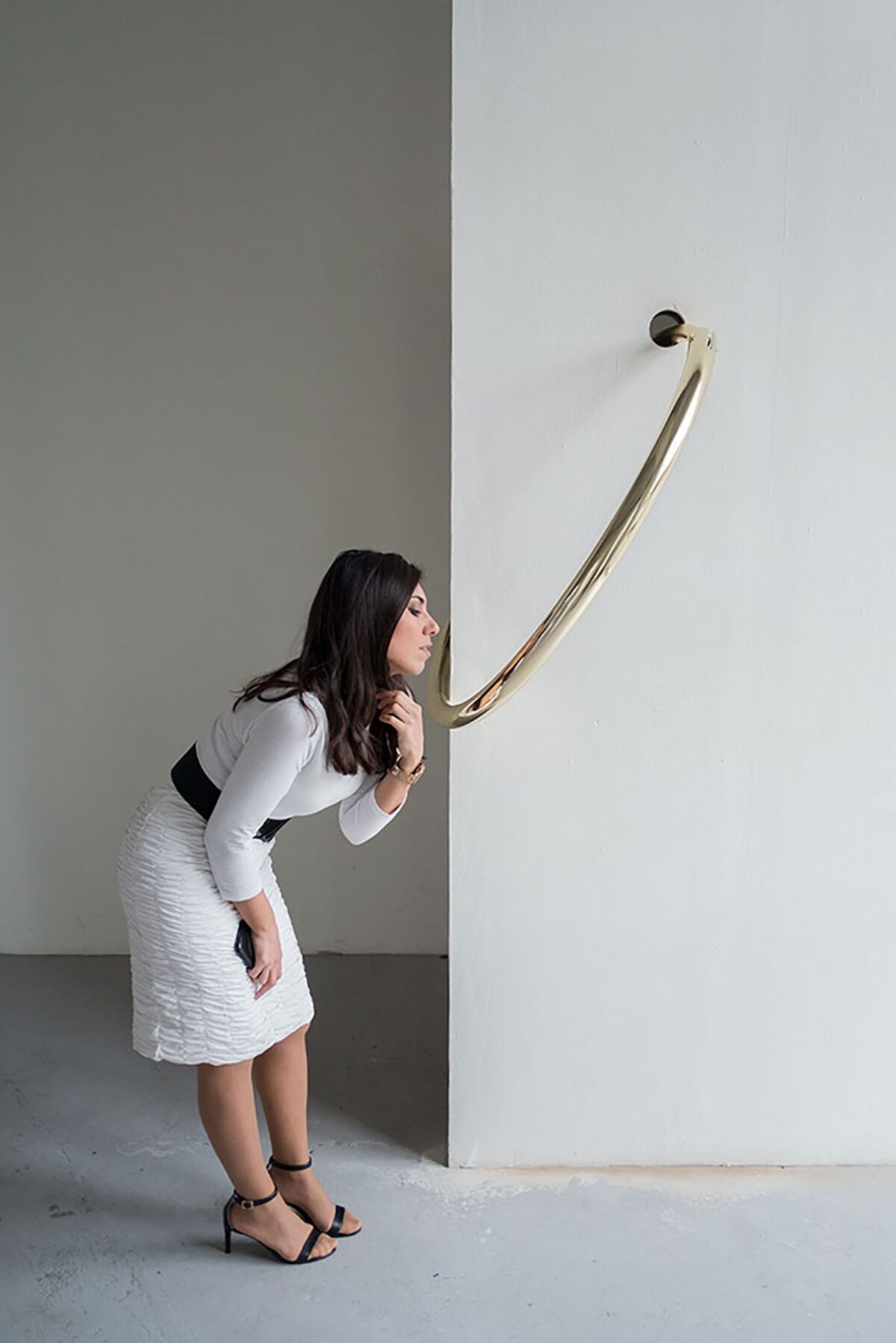
2019
Earring
Metal, gold coloured polish
90 x 90 x 6 cm
Performer: Shno Kamal
What is your greatest source of inspiration?
I am fascinated by confirmative femininity, reality television, capital and media driven personalities. And all of that which in one way or another finds itself in a marriage with modernism or „high culture”.
The femininity we see in popular and consumer culture is of course a very limited form of femininity. It’s the one that has been made a fetish, it’s the one that sells. It has got nothing to do with the entirety of being a woman, or human. It’s a surface that can travel and spread easily across different media, it can find access to homes and shops and can be consumed, copied and performed by others.
Young girls are amazing consumers and have a lot of purchase power. Pretty evident why this industry is thriving! This is where media, social choreography, economy driven by desire and design theory meet.
The work Mass Ornament by Natalie Bookchin, named after the essays written by Siegfried Kracauer, talks about this in a very interesting way. In this video work you can very clearly see how pseudo individuality in Western popular culture functions as a form of neoliberal unison.
With the rise of social media, art became more mediagenic, or Instagrammable, too. I observed this tendency and started to think of the exhibition space as a photo studio for the production of images. What is the relationship between a selfie and an installation shot of your exhibition?
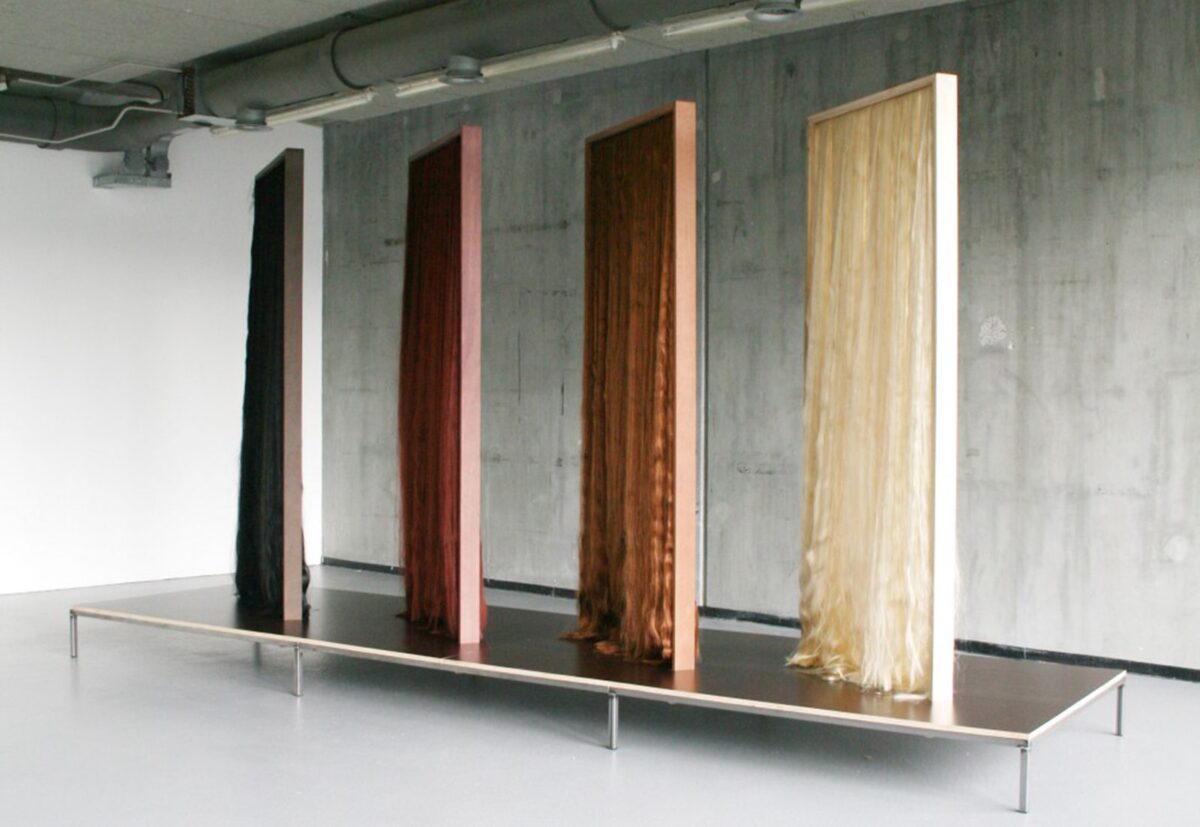
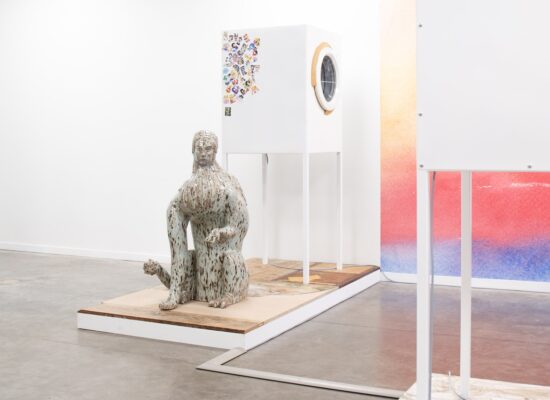
2012
Betonplex, metal, wengé, purperhart, jatoba, tulipwood, synthetical hair (black, red, brown, blonde)
500 x 120 x 220 cm
What do you need in order to create your work?
I need a fascination for something that I don’t fully understand, which creates a necessity to do research and make. I like to explore in depth something which is generally seen as superficial. I need my sense for the absurd, four walls, music and humour.
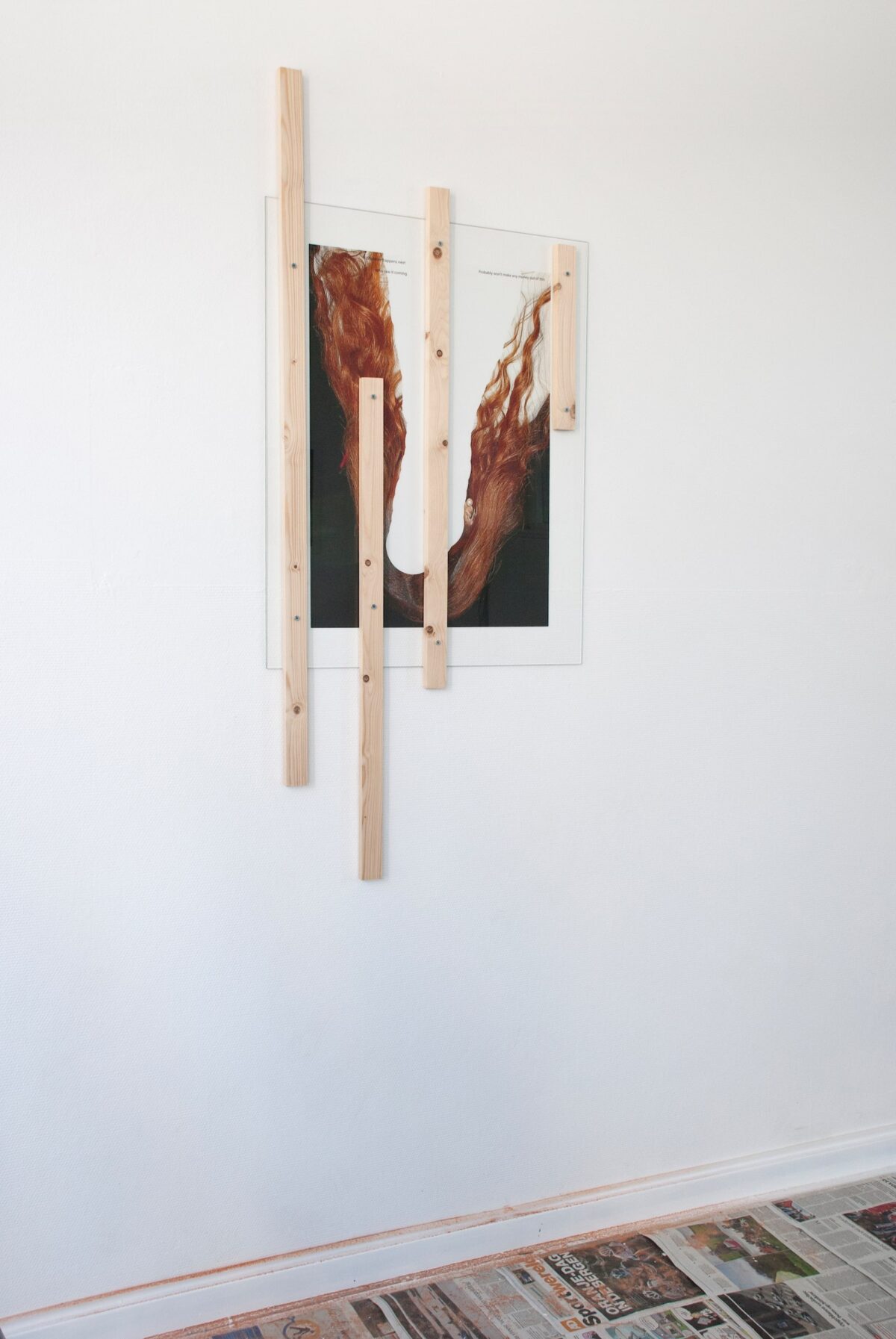
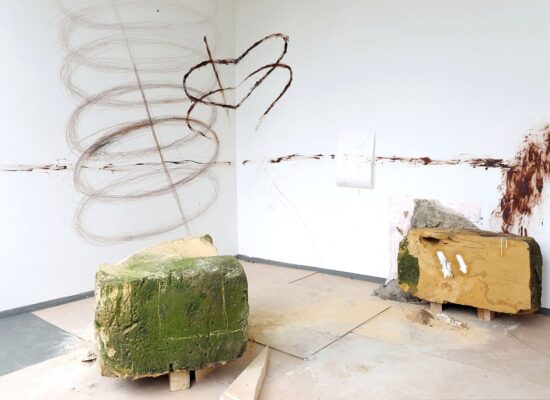
2015
Glass, pinewood, inkjet print, screws
80 x 150 cm
What work or artist has most recently surprised you?
In the GIRLS exhibition in the MoMu in Antwerp I saw an earring designed by D’heygere made with a of DVD of the Simple Life, the reality series with Paris Hilton and Nicole Richie from 2003 – 2007. I thought it was very on point in how it described the mediatized culture of the first 10 years of our millennium.
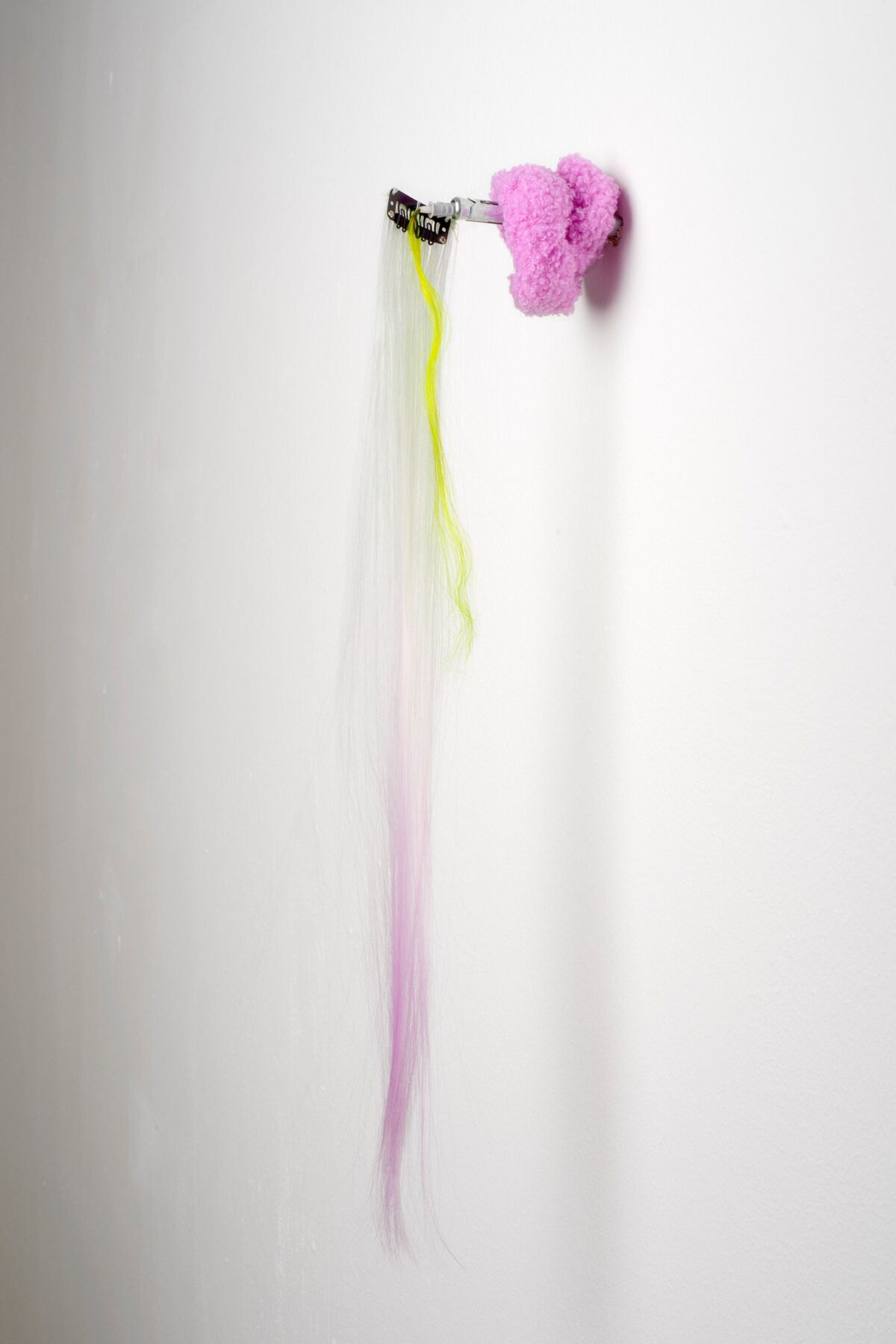
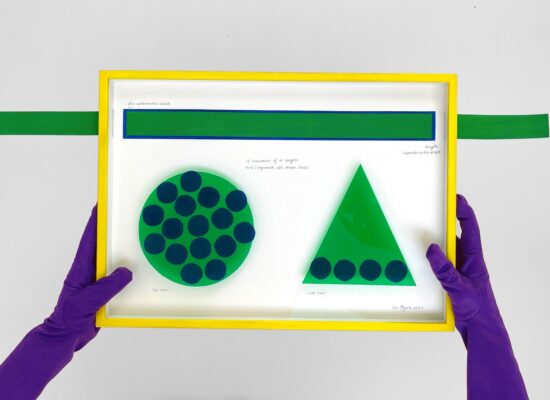
2024
Grey nylon wall plug S5, metal frame anchor S10, white PVC tape, bleached straight hair dyed fluorescent green, synthetic green, white, purple coloured hair extension clip-in, purple synthetic scrunchie.
12 x 7 x 48 cm