Based in Germany
Website https://planetary-intimacies.com
Research project Owning the Fractures
Location The research was self-initiated and funded through external grants. Over time, it received support from various institutions, including Wissenschaft im Dialog and Kunstverein Wolfenbüttel, as well as through field trips and exhibitions across different locations.
Can you describe your research project?
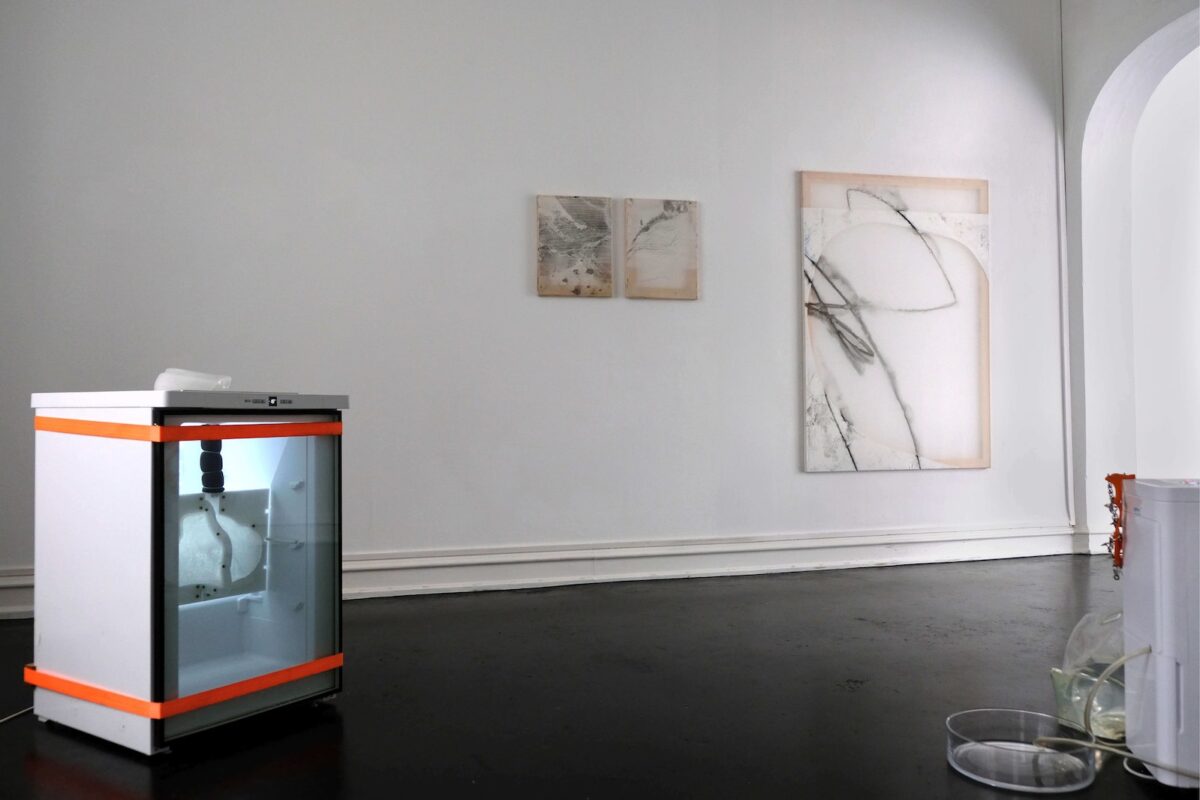
Owning the Fractures is a multidisciplinary exploration of the intersection between human activity, natural forces, and the passage of time, with the fracture as a central metaphor. The project is about owning these fractures—acknowledging the ruptures in our world, both internal and external. It invites us to embrace the brokenness, not just as something to be repaired, but as a fundamental part of who we are.
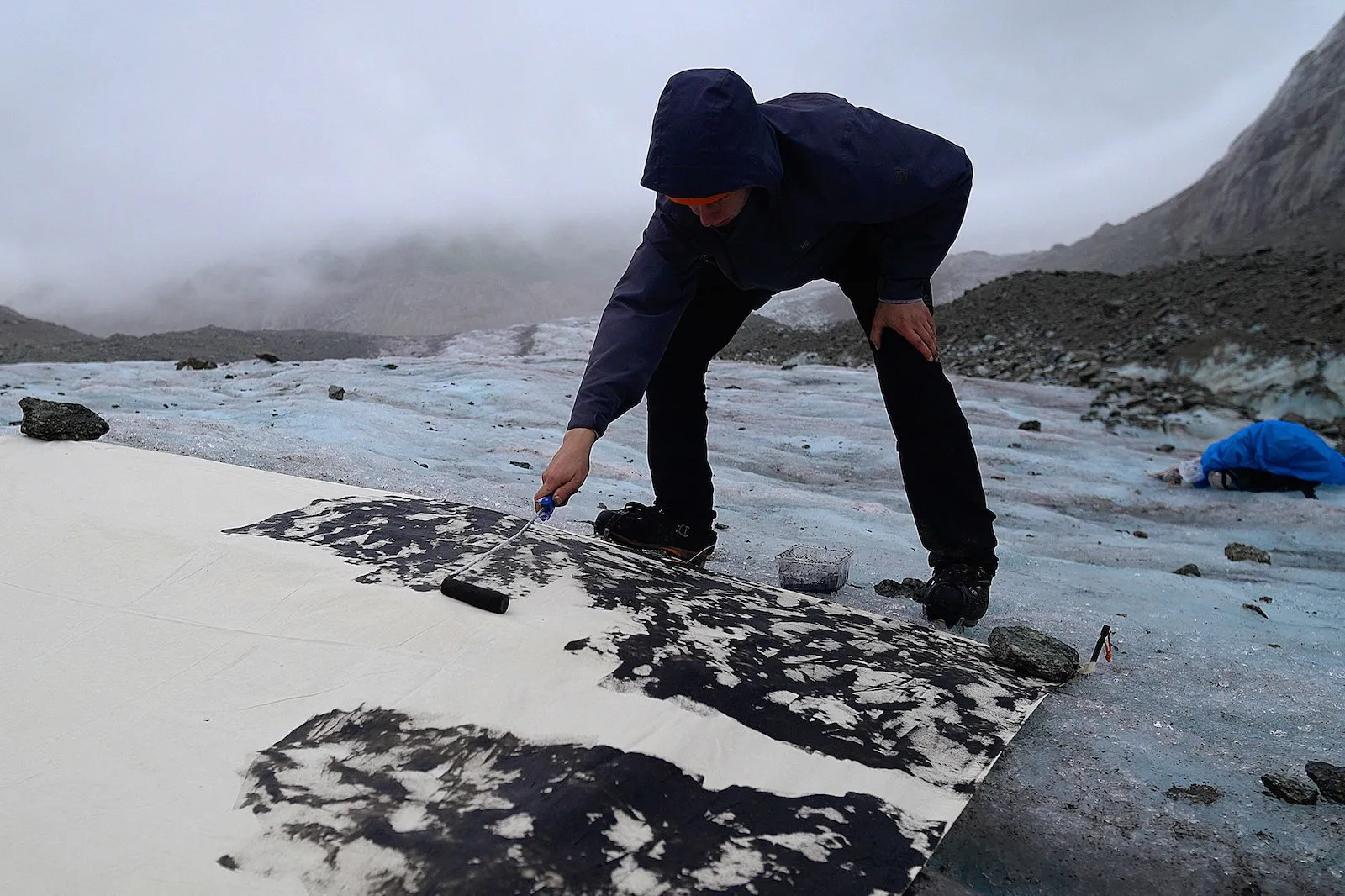
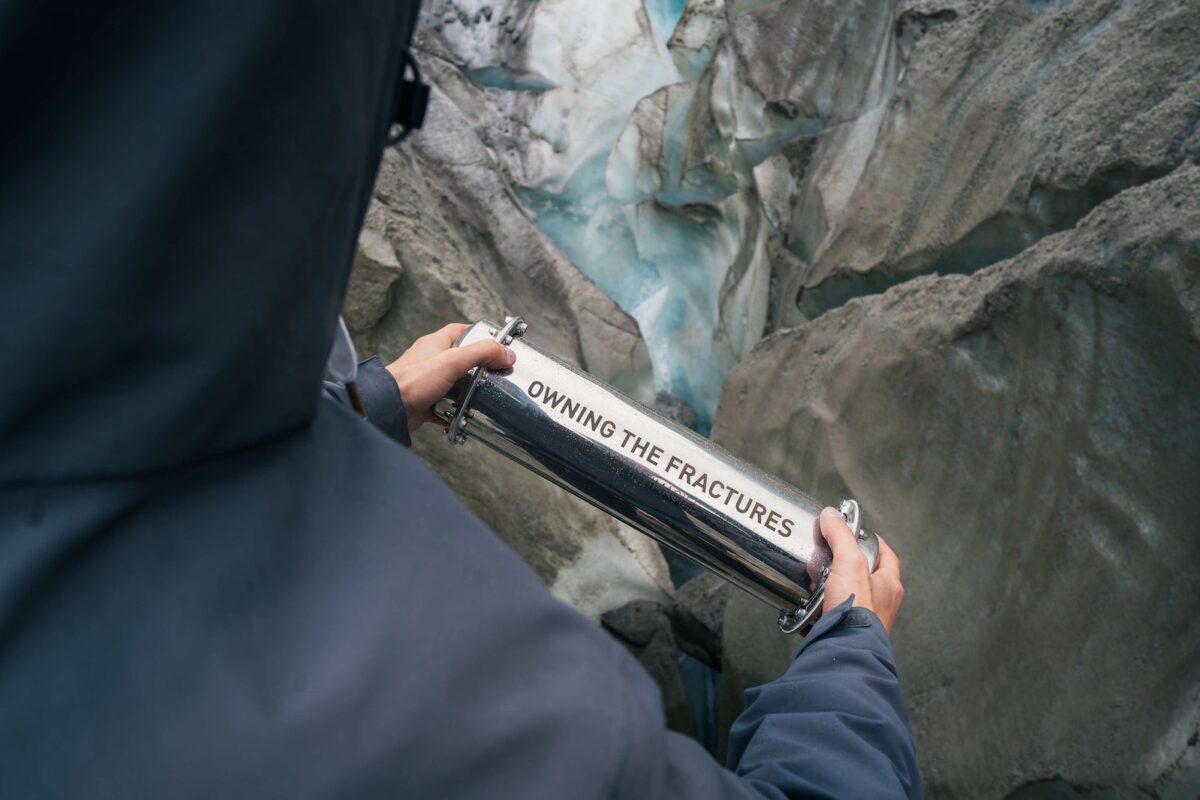
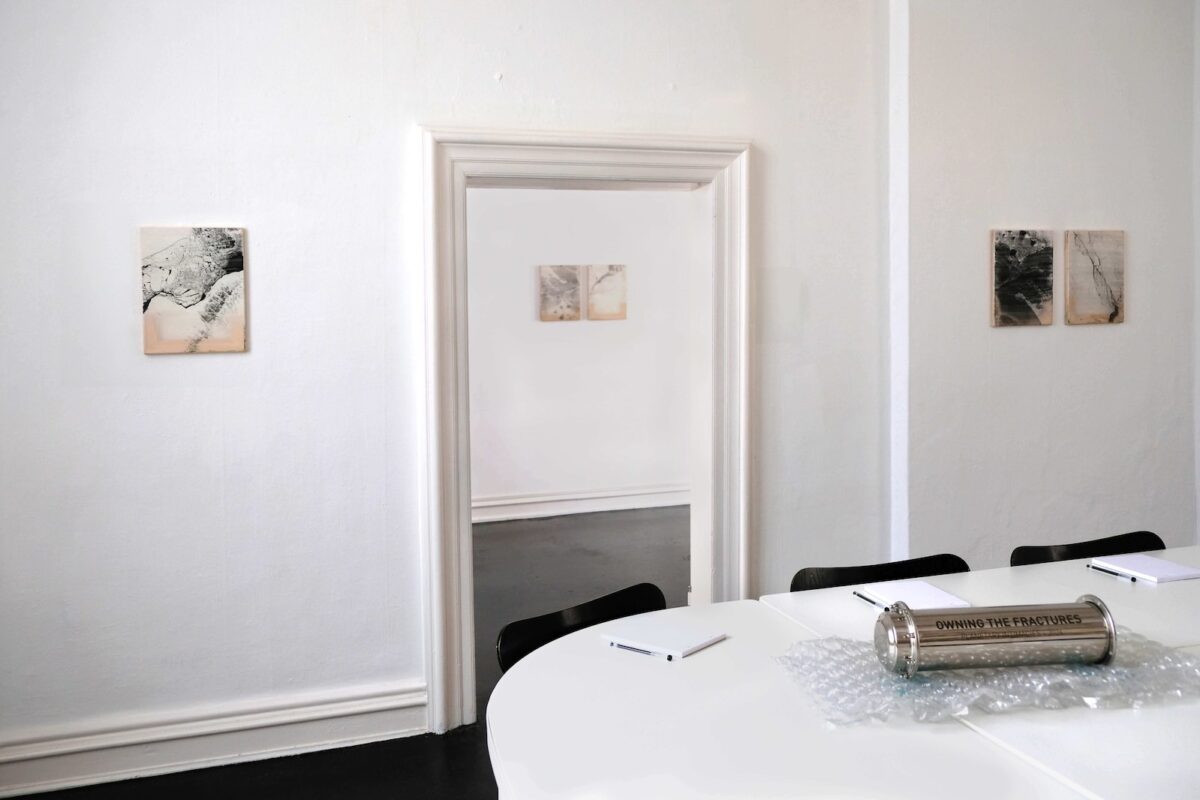
One element of the project, the glacier crack frottages, captures a physical and artistic interaction with something gradually disappearing. The shapes of these cracks trace the boundaries between what is lost and what is emerging. At this moment, we find ourselves in the in-between, experiencing both the fading and the becoming.
Another key aspect is the time capsule, containing a glacier crack frottage, sunk deep within the glacier itself. As the glacier melts, this capsule will eventually re-emerge, symbolizing how the fractures we create—whether ecological, emotional, or cultural—don’t simply vanish. They shift, evolve, and reappear in new forms.
I once thought a fracture would lead us to the abyss. But now, the abyss is disappearing. The glacier melts, and the physical gaps close. The fracture is no longer a doorway—it’s a vanishing point.
Why have you chosen this topic?
My background is in painting, so I was initially drawn to the subject from an aesthetic point of view. But when I started working in the field, immersing myself in the landscape, I realised I had to change the way I worked. There’s something about glaciers that pushes the boundaries of my imagination. It’s not just their immense size, but the contradictions they embody. How can something so vast, so monumental, be so fragile?
This tension between scale and fragility creates a kind of friction, even a blockage, in my understanding. It challenges and contradicts what we think we know about strength and vulnerability, making the glacier both a physical and symbolic site of exploration.
What research methods do you use?
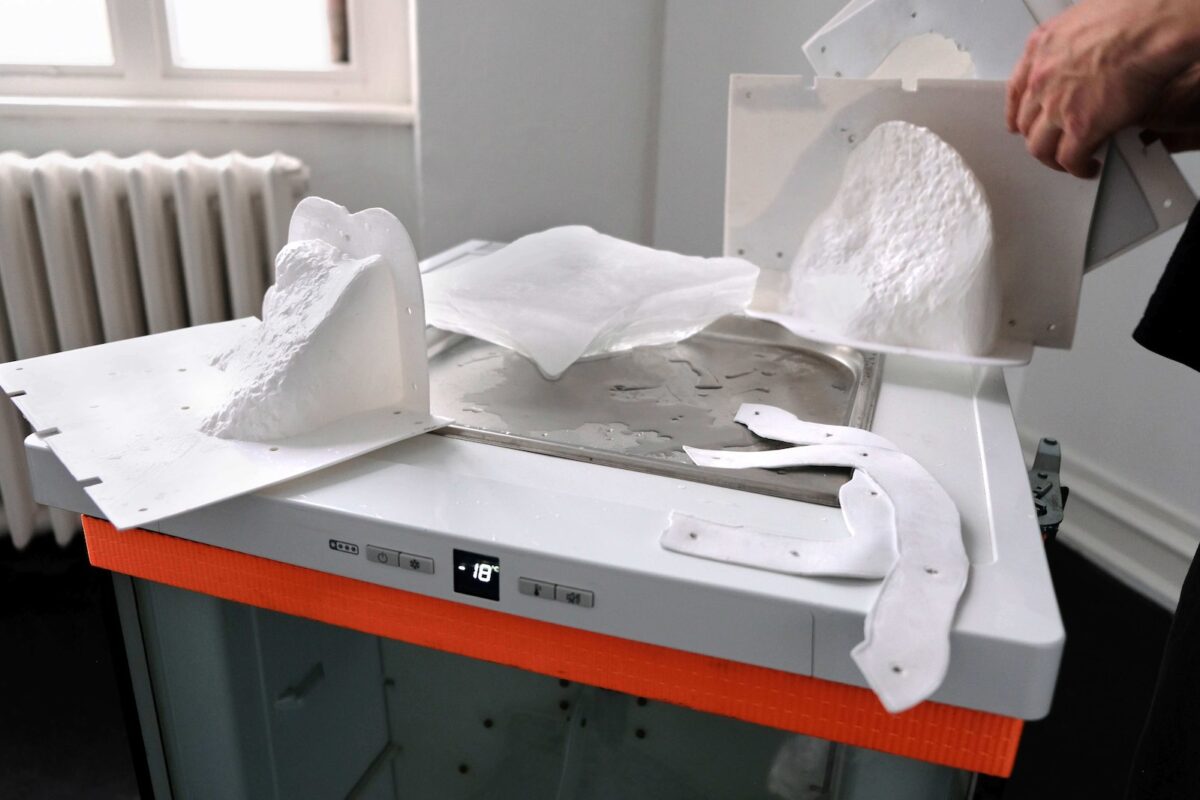
I would describe my approach as a series of field experiments. However, the methods vary from one work to the next. I often start outdoors, engaging in playful exploration and experimentation. This leads to the formation of ideas, which I then try to pursue with consistency. Over time, this process often brings other experts into the mix, such as glaciologists who contribute scientifically gathered data.
These data points become an essential part of my work. I use them as input, and they often shape not only the direction of the project but also its visual appearance. In the end, my process becomes an interplay between my subjective experiences in the field and the supposedly objective data collected by experts.
In what way did your research affect your artistic practice?
In almost every way, I can’t really separate the two anymore. It started about five years ago when I began questioning what landscape painting could even look like in an era where I have constant access to so many layers of information. Whether it’s satellite imagery, drone footage, or scientific data that spans thousands of years into the past or projections into the future, all of this influences how I think about landscapes and how I approach time, beyond just the present moment.
Sometimes, I follow these technological insights closely; other times, I intentionally confront them with a childlike naivety. But this constant interaction with these layers of information has become a crucial reference point in my practice.
What are you hoping your research will result in, both personally and publicly?
In his opening speech for Owning the Fractures, Joshua Groß spoke about how my artistic research seeks precision without excluding the poetic. It’s about finding a new form of honesty as we navigate between melting glaciers, satellite imagery, and our inner landscapes. I hope this work helps us become more aware of both where we are and who we are. If we can develop that awareness, perhaps we’ll better understand the dysfunctions of our world and how to address them.