Based in Madrid, Spain
Website https://soyvolupte.com
Research project Caminho Efêmero
Location Biolab, Lisbon; Portugal City Council, Lisbon Portugal; Nam Mushroom, Lisbon Portugal
Can you describe your research project?
The dirt road dips seem to end in the water. You catch your breath as you reach the top of the cliff, dizzying from the endless blue in front of you and the crashing height below you. We walked this path every day, collecting earth seeds, observing the changes.
When you start looking deeply, you start to see the changes from summer to fall. It started one evening where the air was fresh, but the sun was warm. The mornings were cooler. Then it rained, an immense rain that felt like a sheet, not like drops.
The cooler air was a reminder of the passing of time.
Material – the fundamental element of the design process – has evolved with society, meeting our demands and constraints. Against the backdrop of anthropogenic climate change and ecological crisis, we seize the opportunity to create new speculative futures for life on a damaged planet. Materials from organic waste, circular materials and those bioprocessed from living organisms are promising solutions and valuable tools for planning the transition to the post-Anthropocene. However, limits of design, entrenched political and economic systems, lead to contradictions in what is possible.
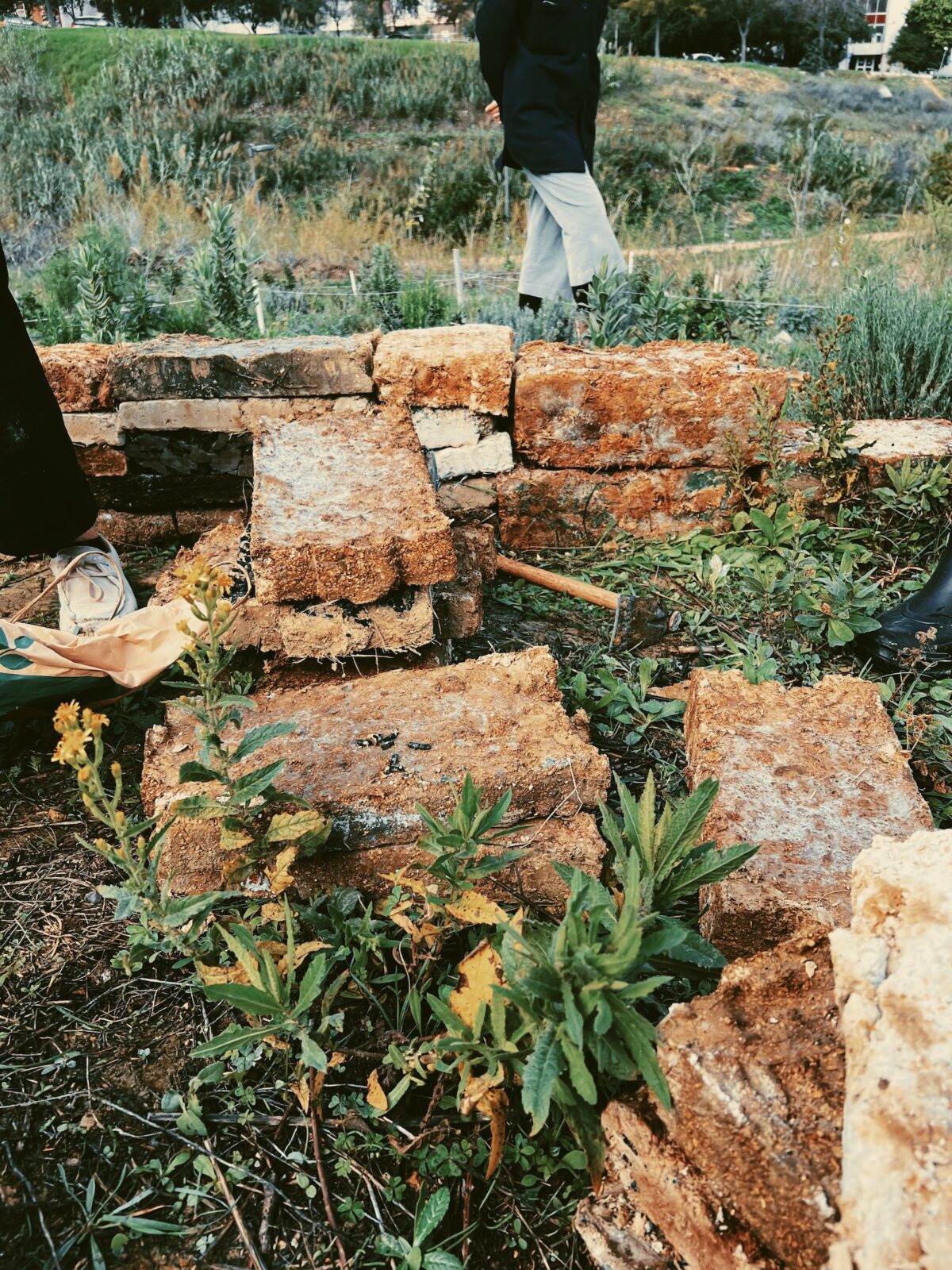
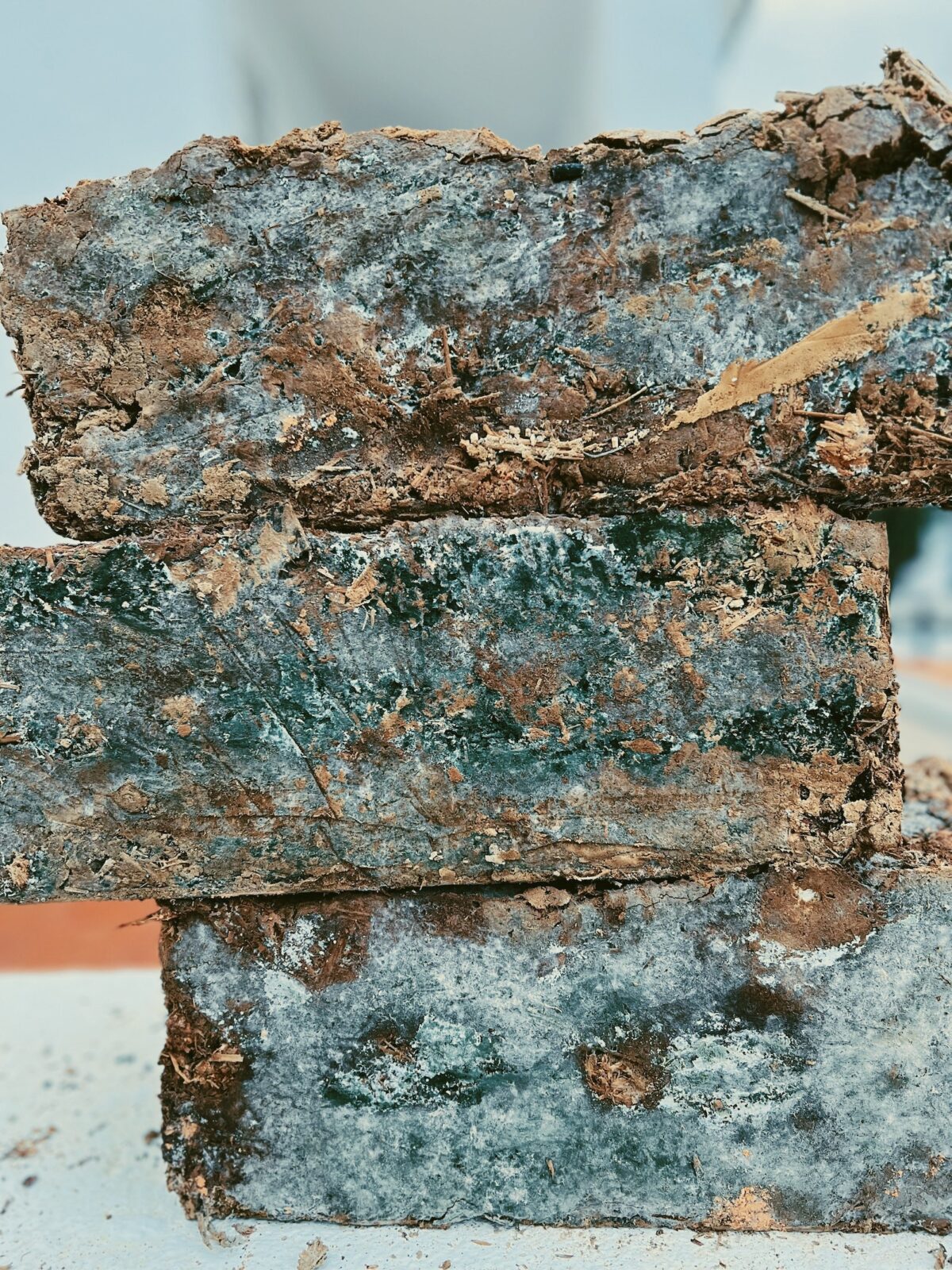
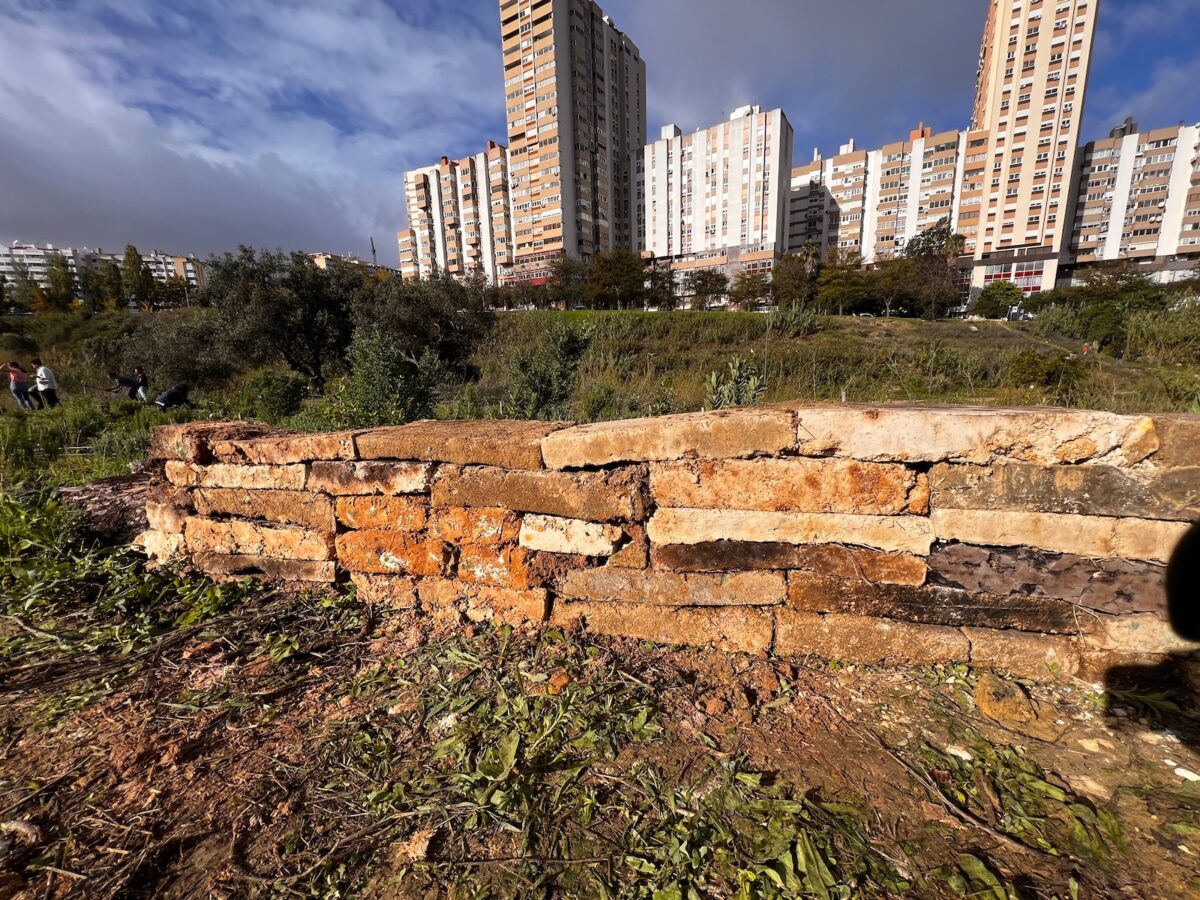
We create ephemeral bricks made from local materials (clay, mycelium, straw, cork) in the Portuguese countryside next to Lisbon. These bricks are installed in Bella Vista Park in Lisbon. The goal is to prevent further erosion in the park as well as increase the number of plant and animal species in the park area.
Why have you chosen this topic?
We propose a new approach that relies on artisan knowledge for the craftsmanship and design for the functionality to break this mold. By combining the tradition and knowledge of artesanía within the world of ecomaterials, we approach design to solve problems while adding value to our shared world. In this residency, we will consider the most tangible design of our constructed world: the brick. What we build with a brick has for centuries stood the test of time, making it intrinsic in our memory of the built world.
Our collective cultural notions of our homes, and living places prescribes the brick as the building block of our joint imagination. Brick laying and bricks are part of the construction industry, currently one of the most polluting industries in the world, leading to almost 40% of Co2 emissions in the world. Instead of freezing the brick as a structural, static, and lifeless object, we seek to give it life by giving protagonism to the material of design. We will reimagine how we make and interact with bricks to consider the main aspects of a new materiality that can emerge from experimentation and sustainable innovation processes, highlighting those material scenarios that open up solutions for a post-Anthropocene era.
Our final product – we create an interrogation of a realized installation of the material as an object to create living walls while supporting wellbeing.
What research methods do you use?
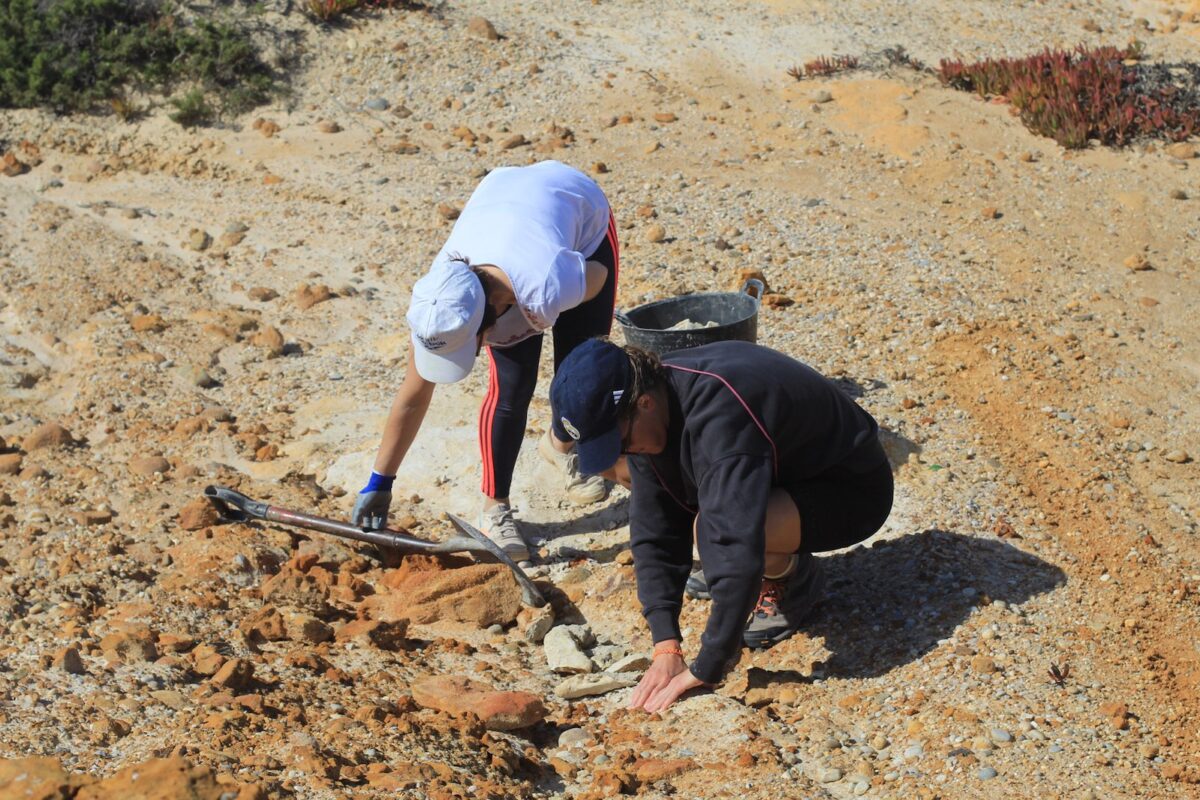
Our proposal begins with material – or the collected local dirt, clay, rocks, sand, straw, food waste (orange peel, eggshell, coffee grounds, mussel, clams and other shells collected from restaurants and so on). We will document collection sites: geography, elevation, soil composition, climate, and the culture of the place.
Through our study of the site, we connect again with the material, as much as an artisan connects with his/her locality.
We use materials that may be considered waste but offer new perspectives of the periphery. Our goal is a study of the surrounding environment that will determine our material’s density and composition.
Second, we produce wooden molds of 2 brick types that we can use to interlock our final bricks on each other. These interlocking molds are based on the Japanese wood cutting and construction technique that uses interlocking joints instead of nails to build structures. With interlocking molds that fit into each other, we can create bricks that are interchangeable and modular. We prototype which type of interlock between earth and biomaterials is most resistant in the production and construction process.
The molds will be reusable and scalable with our biomaterials, so we can build large structures by interlocking the negatives of each mold. One mold will create an open/empty brick, the other will be closed. This will create structures that promote ventilation and regulation of temperature and humidity, promoting natural species colonization.
Impositions of brick material at its most fundamental – mud, dirt, straw, rocks and food waste and native species of plants. Special attention will be paid to the type of mixture created, by adding stabilizers (agar-agar// seaweed) as well as mixing in natural materials, waste materials, and recycled materials. We will also add native species of plants and mushrooms. We will propose two types of composite materials to create our bricks. One will be based on creamy, homogenous materials to make bricks that can remain sturdy and supportive. The second will be a material more heterogeneous to encourage plant life growth and ecosystemic rejuvenation. With these two materials, we will balance the structural foundation with mesh like layers that create movement and space for reinterpretation of construction/destruction. Our result will be a variety of bricks that we can stack upon each other that promote regeneration of ecosystems.
Depending on the species of plants we use, we could create different ecosystems: pollination gardens, fungi heavens, animal havens.
Methodology
Material Study
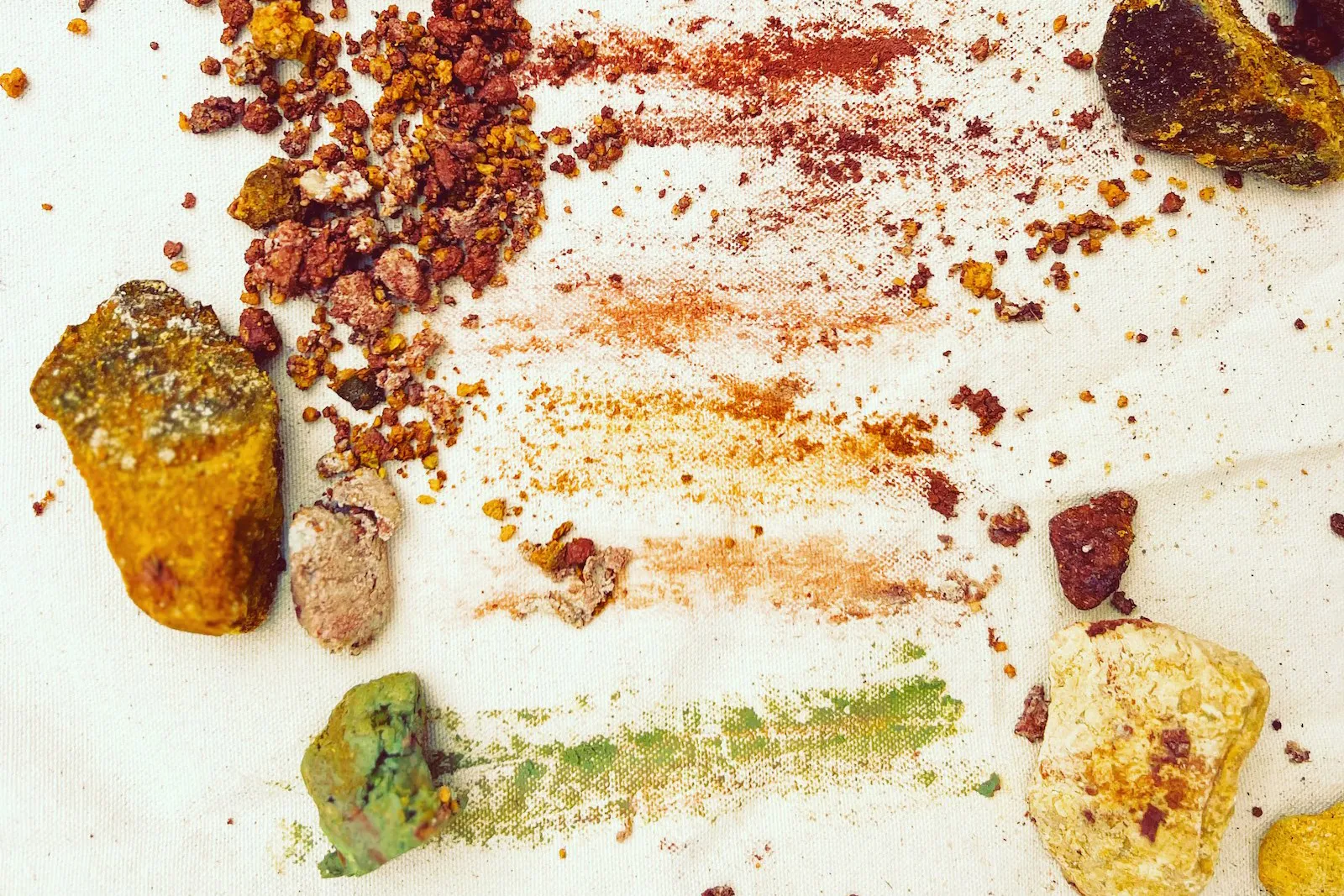
Clay – white like the moon
Clay – brown like muddy river
Clay – red like lava
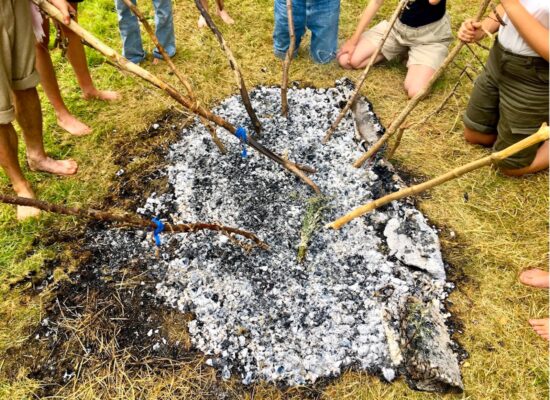
Charcoal – leaves a mark across my hands
Cork – spongy and dry in my hands
Straw – we went out into the field, and we collected dry straw
Seeds – we watched summer fade into fall that week, we collected the dead flowers and their seeds
Site
We use different types of earth that we find. Some are red, grey, and green. The green clay that we find behind in the field behind our house works best.
Collection
We let the water soak the collected clay in our 3 buckets.
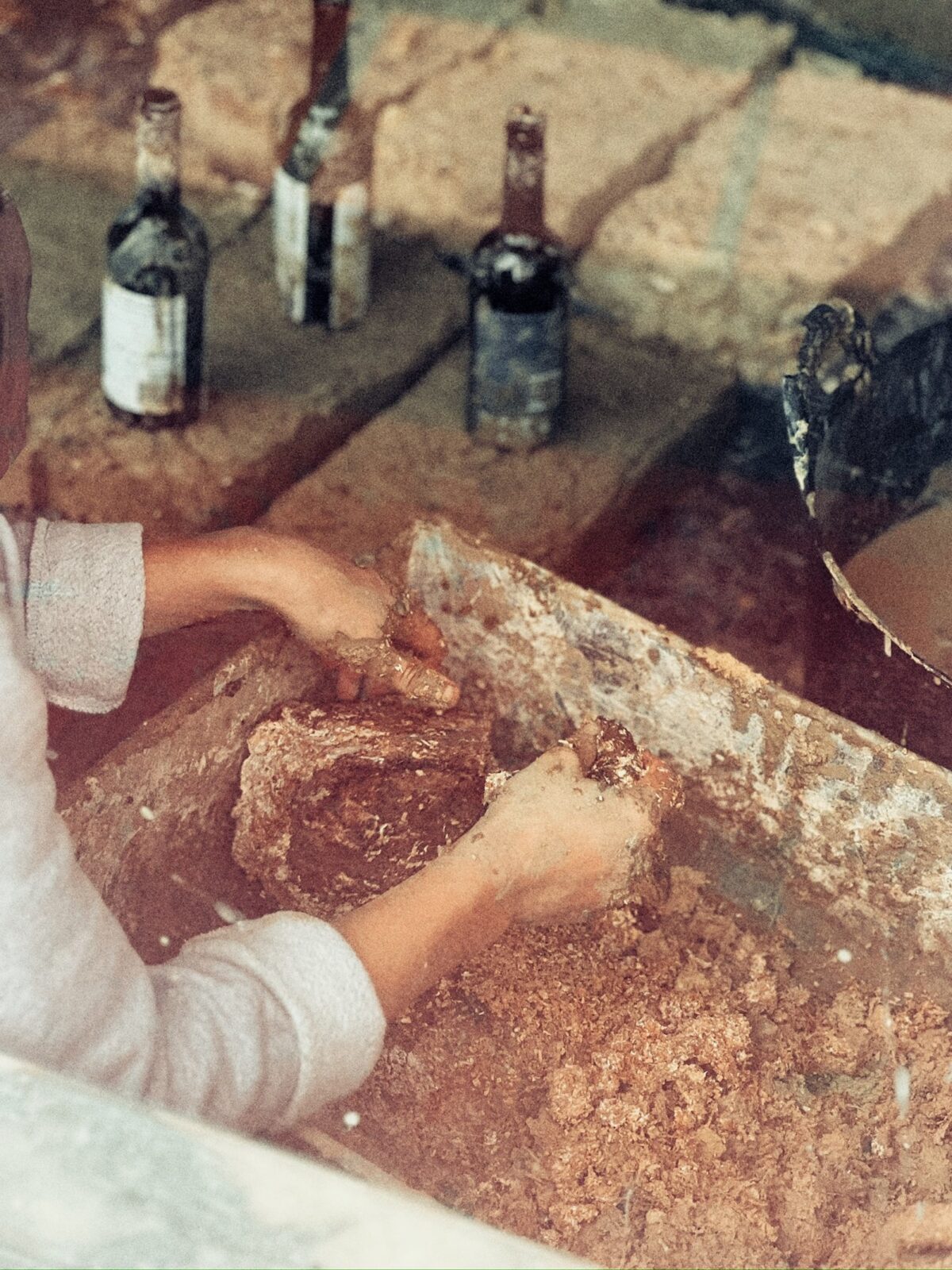
We dissolved any bigger pieces of clay with our hands
We emptied out extra water
Mixing
We will start with sludge mixture of liquid clay. Then we take new materials, as add-ins and then with our hands we fold in the clay and mix.
Smush, pop, bloop. Squishy and rough at the same time.
Mold
We pour the mixture into the mold. Three bricks. It fills and settles to the bottom. We stamp down the sides, we pound the center with our hands. There is a time when it feels complete, and we rise to lift the mold from the floor. In doing so, the bricks are revealed, a basic rectangle with indents on either side. We bake the bricks in the sun.
In what way did your research affect your artistic practice?
Our connection with material and place. We purposefully wanted to create something that is a reflection of the landscape in its entirety. Our purpose was to create something that did not fight with the boundaries of time and place, but adapted to the natural passing of seasons. We aim to reflect the importance of locality and craftsmanship within our practice. Using artisan practices to create everyday objects, like bricks, reaffirms the importance of artisan knowledge. We aim to put our own relationship with materials on display, as we go to the source of the element.
What are you hoping your research will result in, both personally and publicly?
Following the installation of the bricks in Bella Vista Park in Lisbon, Portugal, we aim to continue monitoring them: how long they last, what new species of plants and mushrooms grow around them, and how effective they are at preventing erosion of the area. We maintain our connection and feedback with Lisbon City Council to ensure that this ensures.
Personally, we aim to continue our work in material research by being informed by the local landscape in all future artistic research that we do.