Artists Céline Vahsen
Date 23.06.–20.09.2026
Venue IKOB
Photography Lola Pertsowsky
The threads of her woven images become lines, the colors become planes, and the structure produces a shift. In other words: Céline Vahsen creates images that generate spaces of possibility which seem to be constantly shifting. These shifts are visual formations that particularly effectively challenge our perception.
At first glance it is only natural to speak of craftsmanship when viewing Vahsen’s works. Her images occupy a space that is strikingly shaped by the unique character of her complex creative process. Her works are hand dyed and hand woven. However, an excessive focus on craftsmanship would restrict our view to the result and push the process and materiality into the background. Vahsen’s works are artistic statements that use textile techniques as a medium of visual language. The threads are not merely a material but carriers of meaning, time, and memory, which emerge in the sequence of naturally dyed threaded patterns. Weaving is layering and process; every thread and every row represent accumulation and movement—gestures between the past and the future that precede the image itself.
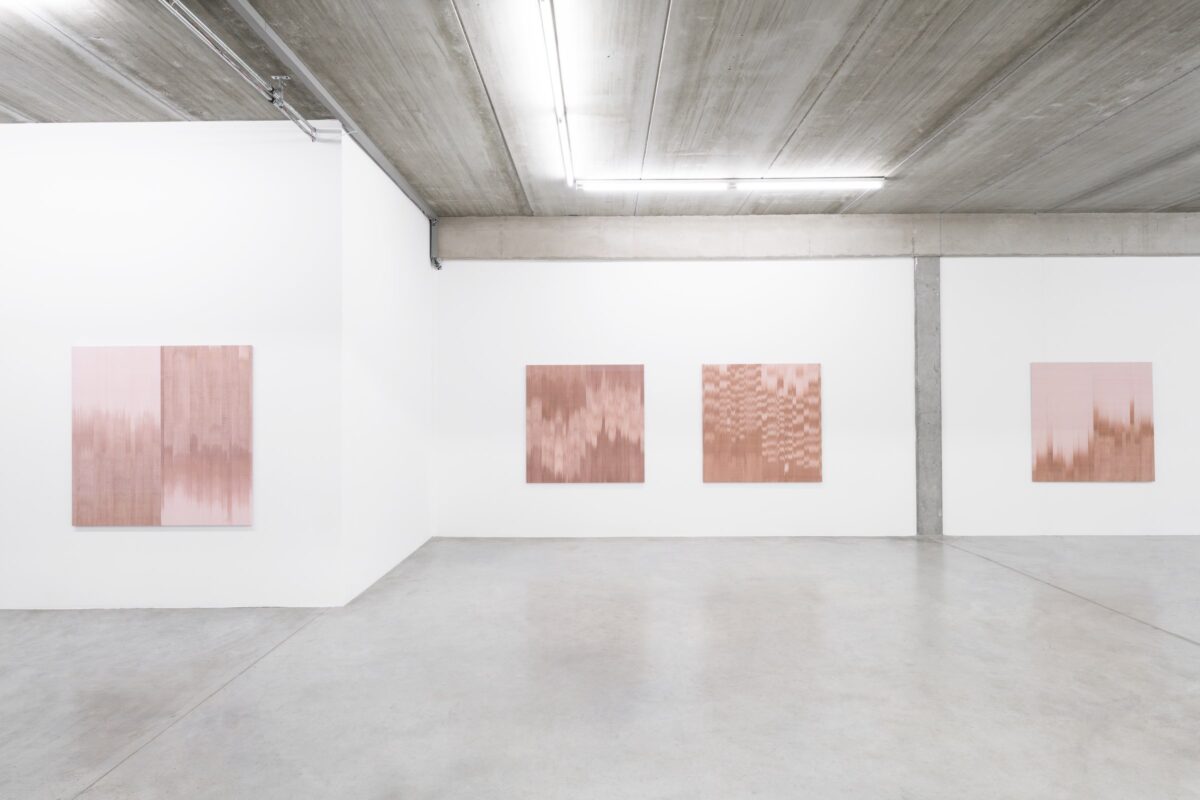
Vahsen’s works, which blend textile methods, are executed with great precision in a complex process and combine controlled sequences with elements that are partly governed by chance. The use of naturally dyed threads, which derive their color from plant-, animal-, or mineral-based dyes, creates a direct connection to cultural practices dating back centuries—if not millennia—and in doing so generates an almost hypnotic depth. The color transitions rarely appear abrupt but rather fluid and organic, similar to geological layers or tree rings. Her work begins with the careful selection of natural fibers, primarily wool and cotton. The dyeing—the most important and technically demanding step—is carried out exclusively with natural dyes, a process she pursues with experimental intensity.
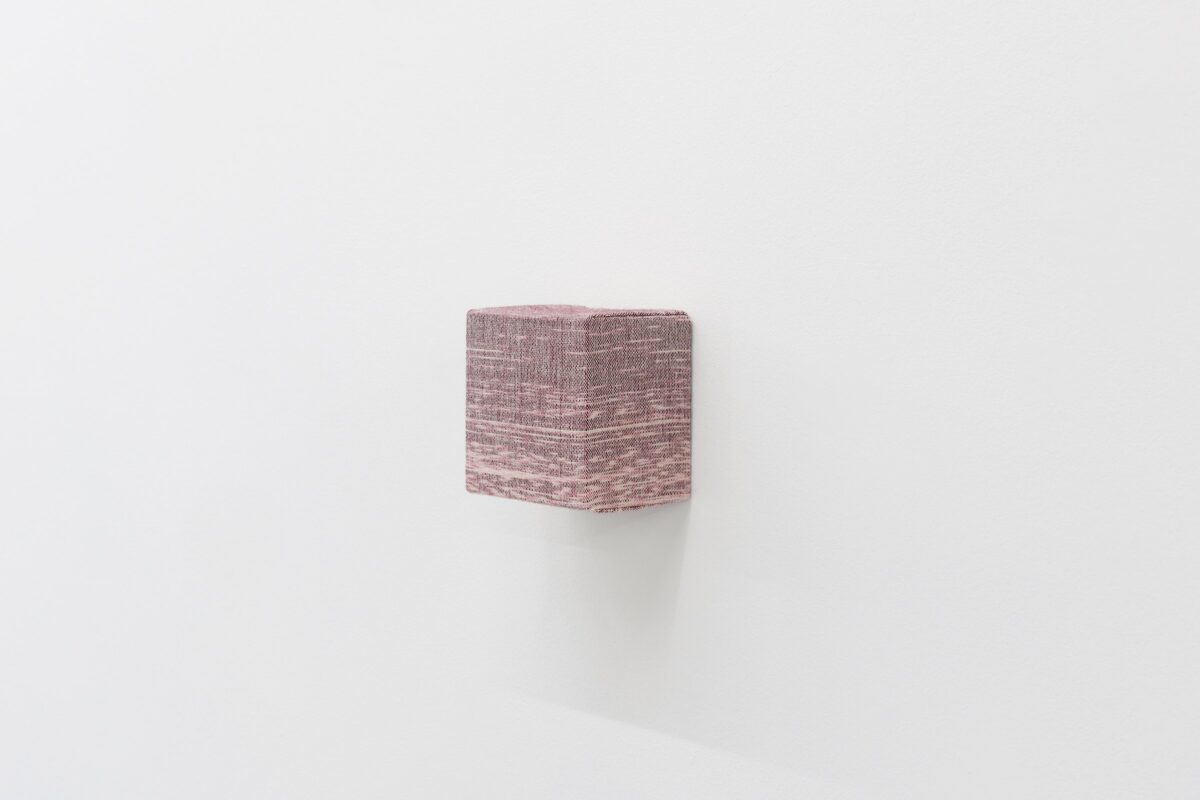
Although all of this takes place as a prelude to the finished piece, it takes on much greater significance once you speak with the artist. Once you know about the process, you see it, feel it, and understand it. For her, therefore, the preparation and execution are almost as important as the finished painting. The material quality of her works is also remarkable. In an increasingly digitized world, Vahsen emphasizes the sensory experience of the canvas—the warmth of the material, the texture, the theoretical possibility of touch. This physicality creates a direct connection between the viewer and the work, which helps to explain the powerful impact of Vahsen’s paintings.
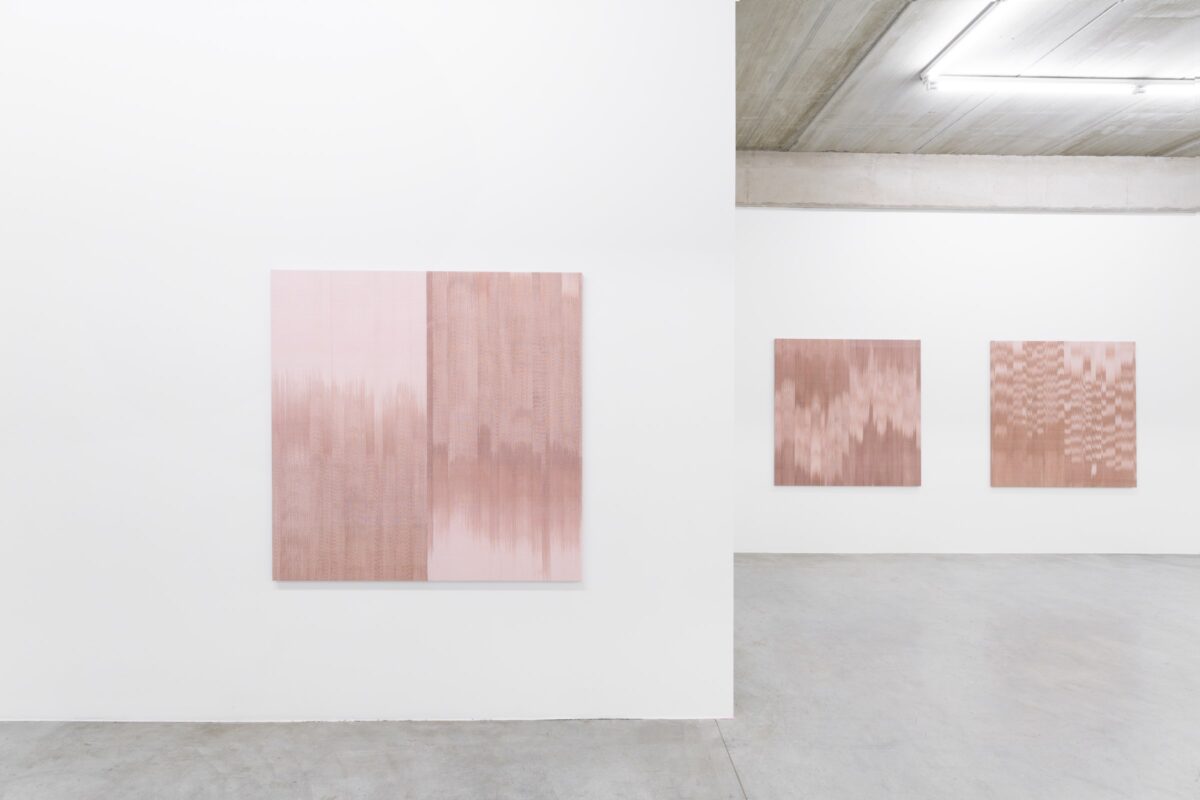
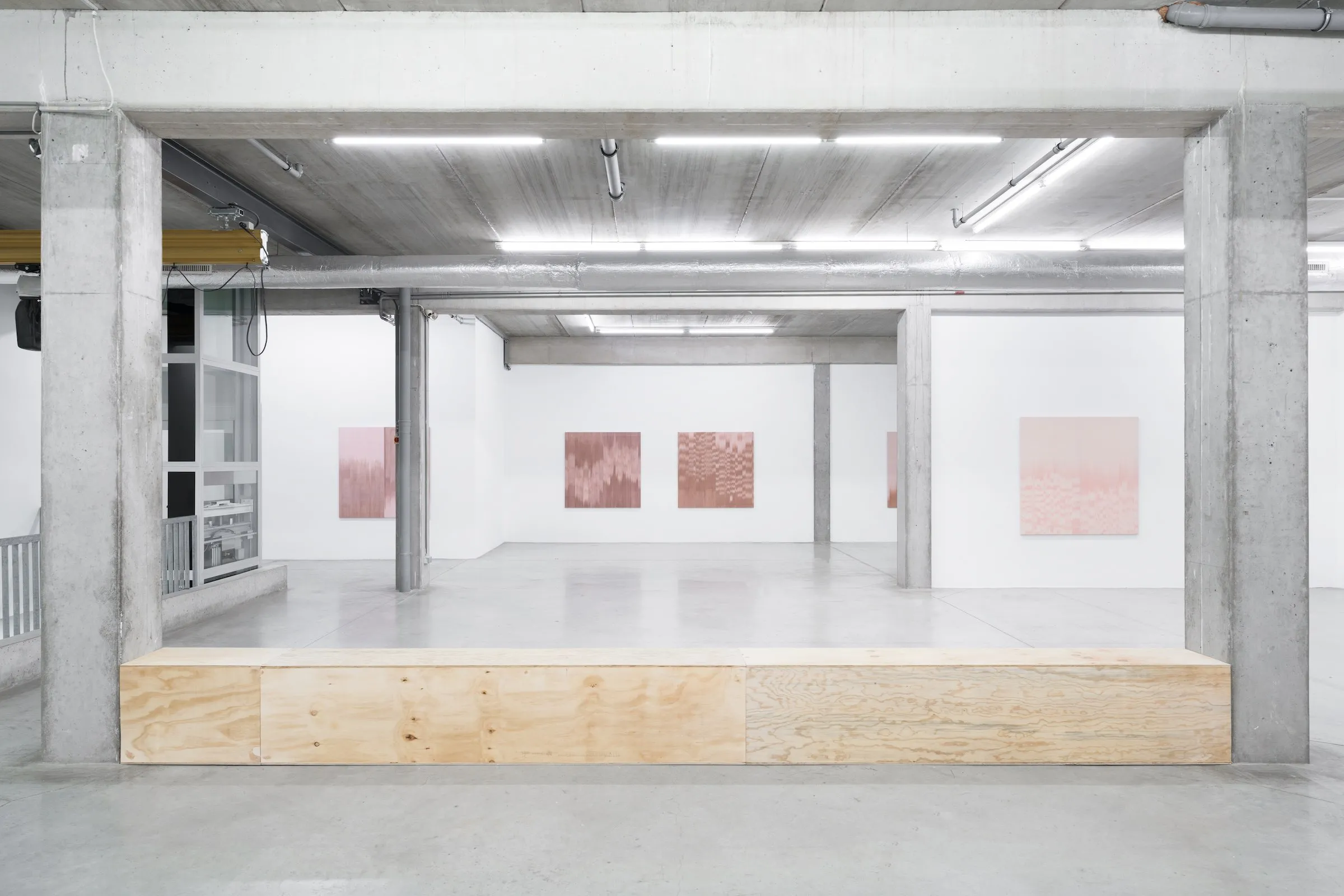
The artist has tailored the exhibition Shiftings specifically to the venue. In addition to the benches in the main room and a large wall of wooden panels in the exhibition’s smallest room, it is above all the two dominant picture formats that define the exhibition concept and shape the viewer’s experience. The exhibition offers visitors three different scales of imagery. A monumental work, standing 2.5 meters tall, was created specifically for the exhibition at IKOB. This work, which is downright imposing even by Vahsen’s standards, contrasts with a new series of smaller works that require a more intimate viewing experience. The large-scale work resembles a landscape that invites the viewer to immerse themselves in the depths of the image. The smaller pictorial object, conversely, compels viewers to step closer. Together, the two groups of works create a movement—or a shift—between immersion and intimacy, inviting reflection on perception, memory, and time.
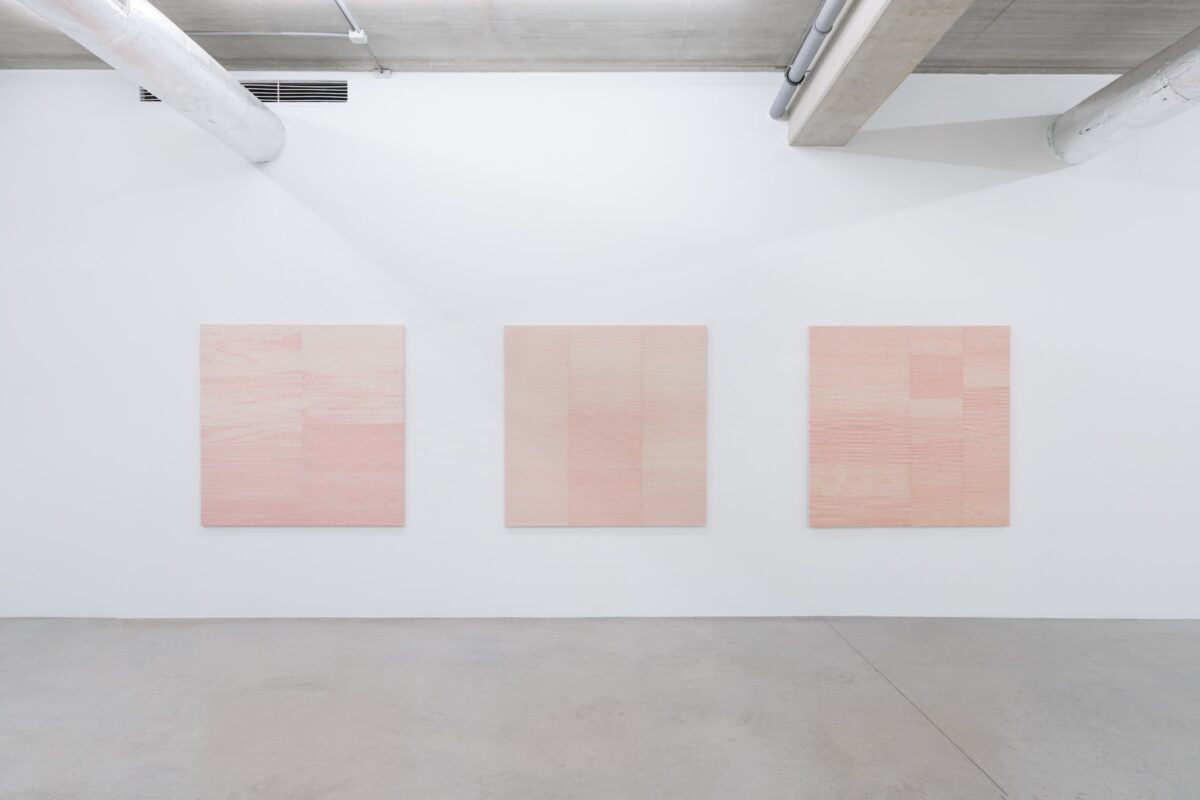
Vahsen’s works move confidently between different temporal planes. The temporal dimension of her work is immediately perceptible and anchored in her pieces in various ways. The different sections of her canvasses preserve the working process. Every thread, every seam, every color gradient is a reminder of time devoted to and embedded in the works, which are not only the result of a process but also its documentation. They make time apparent as a material dimension. In its transience, time enters into a tension with the mathematical realities of the loom, which organizes and sequences time, while color transforms it into a reactive and open state. Although ecological considerations influence the production process, the works do not primarily exist within the context of an activist discourse. Rather, the use of sustainable materials and dyes is understood as part of a self-evident material logic and as an integral component of Vahsen’s artistic practice. At the same time, this practice explores the relationship between humans and nature on a deeper level.
A list of recommended readings was specially compiled for this exhibition by Céline Vahsen.