How do you describe your own art practice?
journalist
Is there any other way to answer to how than with words?
coordinator
Clear. How = with words. Check. Let’s briefly align on the word describe. I looked it up. A description “is the act of providing a coherent enumeration of everything one can perceive about the person, object, concept or process being described.” [1] So, in short, what we are looking for here is a coherent enumeration of everything we have perceived in your art practice. In words.
guest
Okay.
freelancer
Okay? A liaison of clumsy letters. That then haunt you endlessly, forever. Marching one after the other. In step. In rhythm. I say we say: no comment!
coordinator
No comment is no solution. But the risk you point out is important to acknowledge. Words are incompetent representatives. As if you replaced ballet dancers with police officers. The work never equals those words.
freelancer
And those words aren’t even yours! You can only choose from what is already hanging on the coat rack.
journalist
Then whose words are they?
freelancer
I think I am the one who created my words. But I only choose from what the Multitude has already laid out. “The words already existed. Some 150,000 years or so. But though we may use the same words, we cannot say we are speaking of the same things. We cast and burnish our thoughts but I’m a different person today to whom I was yesterday.” [2]
mediator
I hear your resistance. What if we point instead of fix? For example: “I play to figure things out.” [3] Is what famous basketball player once said.
intern
That’s nice, but… I don’t know if you can, uh, take something back once it’s said. I mean, once it’s out there…
conservator
I think we’re making this too complicated. In the book you also use words to describe what you do. For instance, you say: “I saw my oeuvre as a railway. I would leave a new work at each station and travel on. With a growing collection of insights into human interconnectedness in my wake. A trail that grew longer and longer and longer with each passing year. I now see my body of work as a lively playground. Like those wonderful examples made by Aldo van Eyck. Or Isamu Noguchi. In which all works have a permanent home.” [4] Making work with the idea that it becomes a lasting part of a lively playground. That is an answer to the question.
freelancer
Yes: An Answer! But utterly incomplete. You could also repeat this one:“Cindy Moorman’s art breaks through object-orientation. In her work, the encounter takes centre stage. The visual spectacle may be present, may be seen, but it plays a supporting role.” [5] Also an observation of your art practice.
guest
Yes. Both describe it.
coordinator
Check. No coherent enumeration. But two observations. Let’s continue.
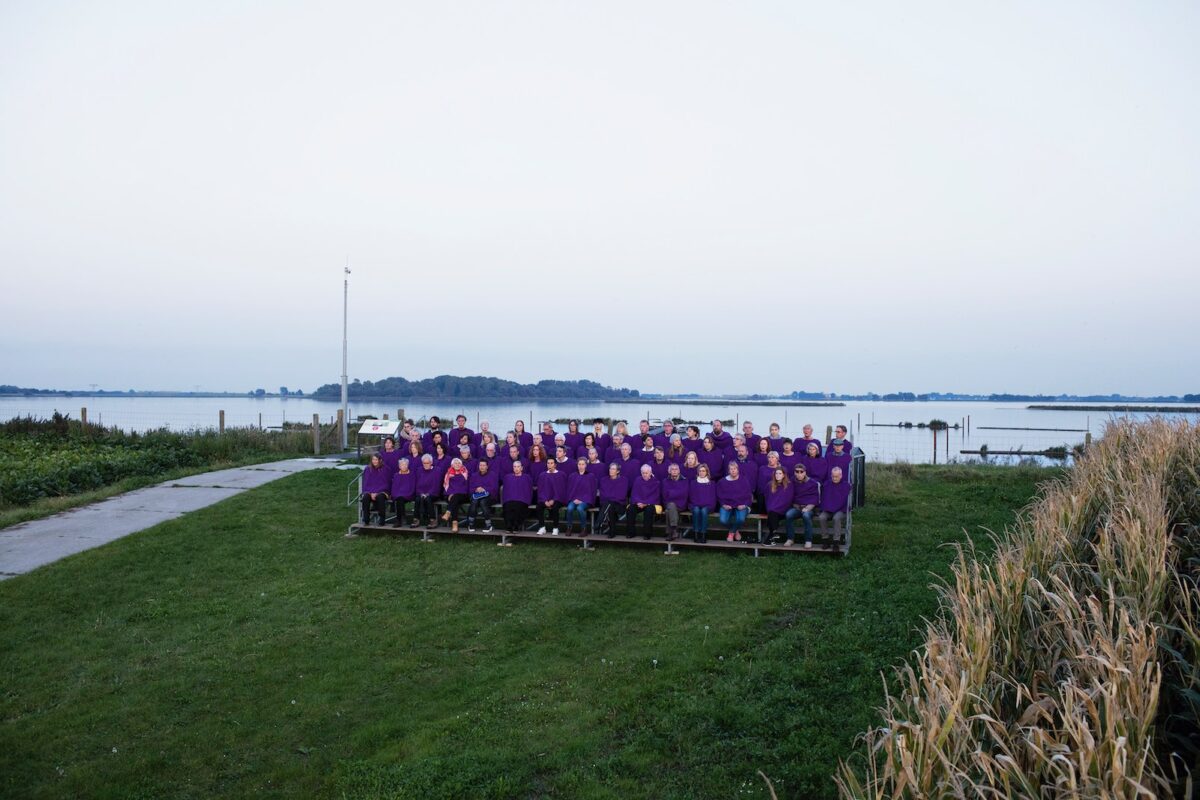
Scripted Gathering
Land Art Life
Which question or theme is central in your work?
intern
May I… uh… answer that?
guest
Of course.
intern
I think it’s connection. That’s the central theme. It’s written that way in the book as well, so…You write: “All my works are gatherings, actually. I call them: Staged Encounters. They always start – as is the case here – by entering a space. A setting. One that we share with one another, albeit temporarily. Like this book. So that together, we can explore how connectedness works.” [6] That’s on page one. That seems like a good answer. Or…?
athlete
A lay-up.
conservator
True. Then we can also uncover the underlying question: “How do connections come about? All of a sudden, there’s something between us. Something that links us. Like a game of tug of war. But what? Where does connection start, or finish for that matter? Can you be bound together even when you’re in different rooms? Which role do formal elements play? Orange tape, a song, a decision tree, polka dot socks, this publication, these words?” [7]
coordinator
Check. Good work. Next question.
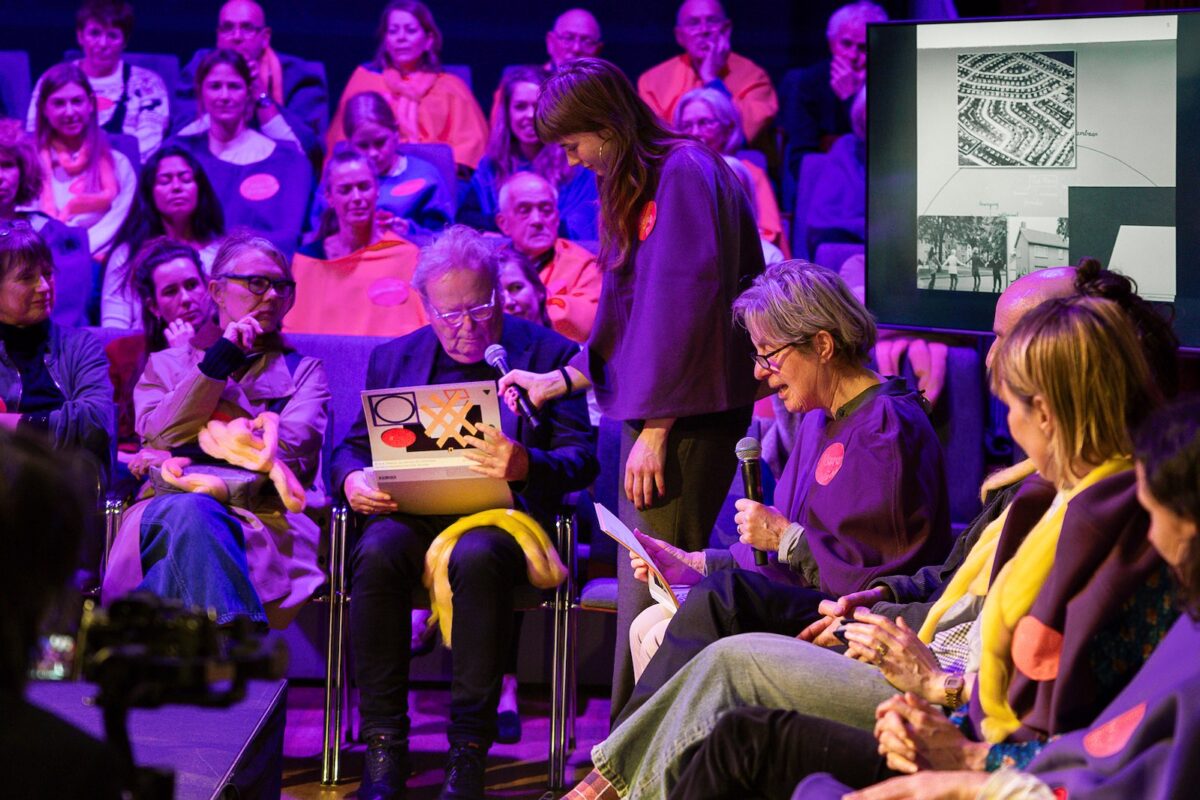
Scripted Gathering
De Balie Amsterdam
photo by Viktoryia Kharytonava
What was your first experience with art?
conservator
Here lies a clear point of departure. Let me take your own words: “I started out as an Observer. Dressed up as a social scientist or an anthropologist, I watched people engaged in collective motion from the sidelines. I photographed them, filmed them, took all kinds of notes – all so I could learn how it works: creating connection. Being connected. What happens? What’s required? I discovered the people themselves weren’t the ones directing their collective motion, but that which existed between them. Everyone gathered and moved around or by means of these Objects. They weren’t random props but purposely planned catalysts. Tree sections in the middle of the road. A procession that halts until the logs have been chopped up by two men bearing axes. The wooden block that drops a full sixteen metres, temporarily making a local celebrity of whoever shot at it last. This person is then lifted on the others’ shoulders. The long coats that mark out the leaders. The song signalling it’s time to get on your feet and join in. As if I had entered a world in which everything made sense. According to its own logic. I recorded everything..” [8] A marking of the foundation of your work.
intern
But… that’s not art, right? or is it? because the question is about an experience with art, but…uh
athlete
Sorry, could you please not make phone calls while we’re talking? Thank you.
journalist
Hold on. What distinguishes those rituals from her Staged Encounters? Why would you call one art and not the other, if they are formally so close?
coordinator
Stop. That doesn’t seem relevant now. First experience: village rituals. Check. Question four.
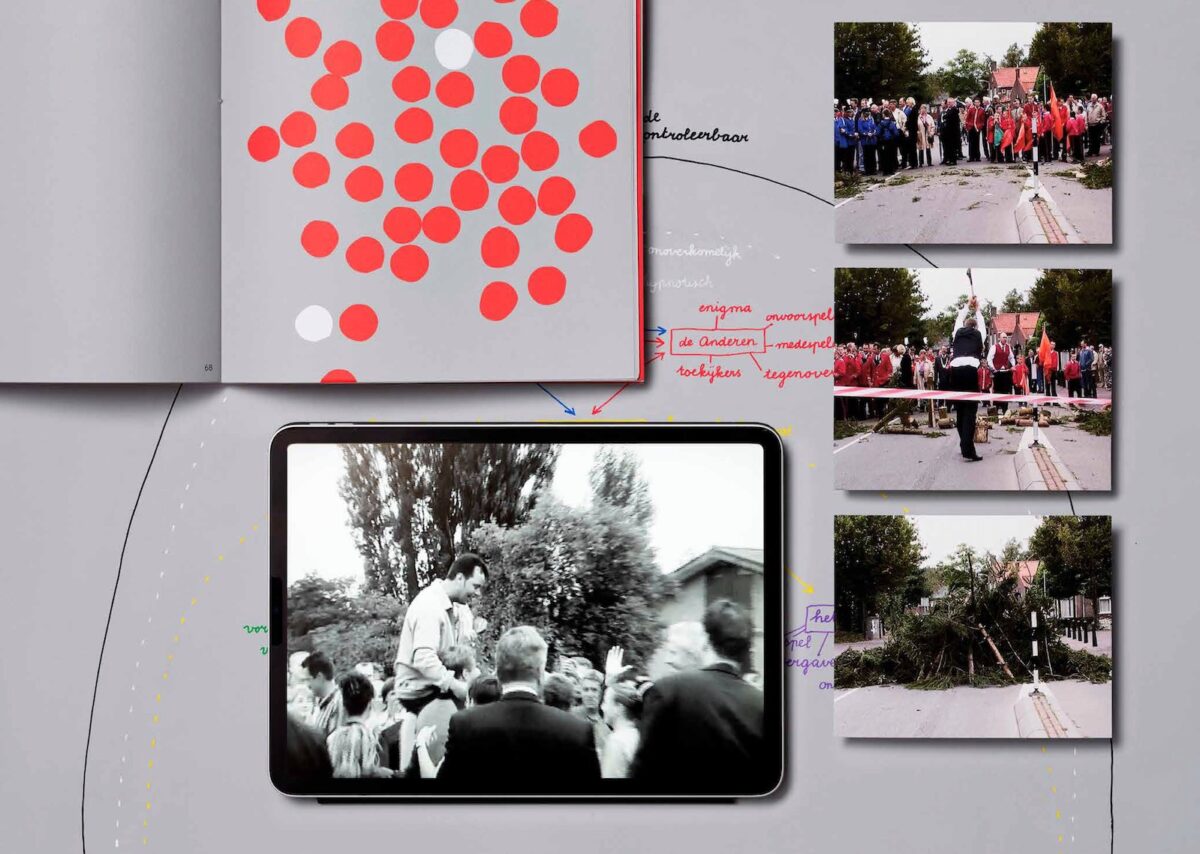
Book
Set’ Margins
photo by Andre Witkam
What is your greatest source of inspiration?
coordinator
Source. Singular. That’s a problematic endpoint.
journalist
Problematic? If you peel everything away, don’t you end up with the same thing for every artist: life?
freelancer
So this is it then? All artists reduced to one answer! “When we join the line, we enjoy things the way the Multitude enjoys them. We judge the way the Multitude judges. We are offended by the same things as the Multitude. In Line. In Step. To The Beat of the Drum.” [9]
magician
Applause!
journalist
“Do you really see us walking in one line?” [10]
freelancer
What do you think.“Nothing ever came out of simply moving along with the rest. ‘Change and progress are only possible thanks to unconventional behaviour.’ Create diversions. That’s my tenet. And I believe in artists as Master Diverters. You, for instance. With your explicit Extra-Ordinary Activities.” [11]
guest
Thank you.
coordinator
We’re drifting.
conservator
Agreed. Here too, an answer is already present. The Borrowed Words and Images list in the book. It reveals your sources of inspiration: from Heidegger to Alice in Wonderland, from Tati to Groessen, from clouds to socks. Yes diverse and multiple, yet operating within one field.
coordinator
Thank you. Check. Two questions left.
guest
You really don’t need me here at all.
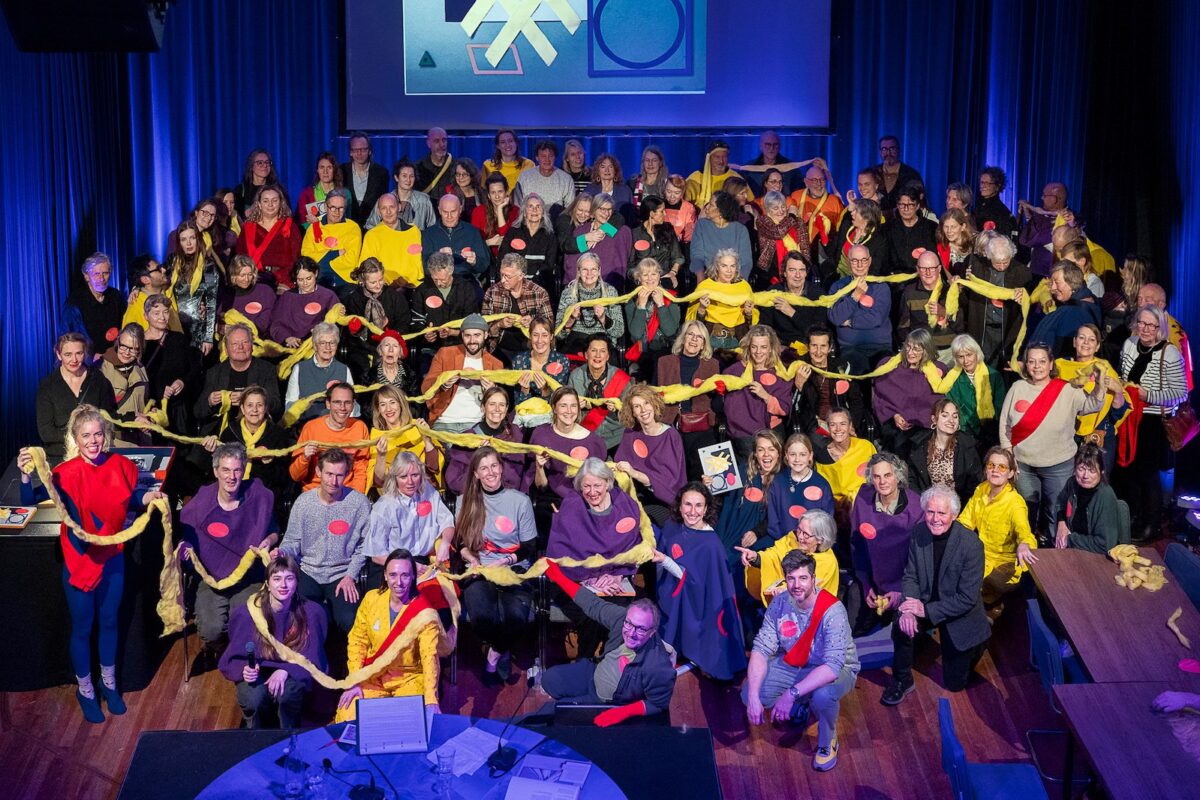
Scripted Gathering
De Balie Amsterdam
photo by Viktoryia Kharytonava
What do you need in order to create your work?
journalist
If you strip away all ornament, is there for an art practice any answer other than time, money and space?
coordinator
Fine by me. I don’t see these questions as tools for distinction, but as Connecting Objects. Connection unites two or more separate parts. To connect them, we must find something that bridges the space between them. Red and blue paint will never magically turn purple by themselves. Connecting places, people, groups requires a mediator: a shared language, agreement, rule, rhythm, goal, song, uniform, flag, ritual. These questions.
freelancer
No. Absolutely not fine. What’s needed is to keep playing. Staying in motion is the only way. Training yourself in letting-go agility. Thinking against the grain. Creating unpredictable rhythms. Resisting the lure of the Great Grandiose Convenience. And—no less important—choosing the right fellow players.
athlete
Touché.
freelancer
Because “The I becomes more clearly defined thanks to the Others. And some fellow players even help me to step up my game. EveryYou presents an opportunity to realise a specific aspect of yourself.’ The opportunity to try out new roles. Test scripts, improve your playing skills. That’s why it’s so important to choose the right fellow players. Team mates, friends, collaborators. How you play the game is determined by who you move along with.[12]
mediator
Sorry. Did you also have a question? No? Oh, I thought you raised your hand.
coordinator
Check. Keep playing with the right fellow players. Final question.
athlete
Can we maybe get a harder question? Something about personally steering Objects or the Great Grandiose Convenience?
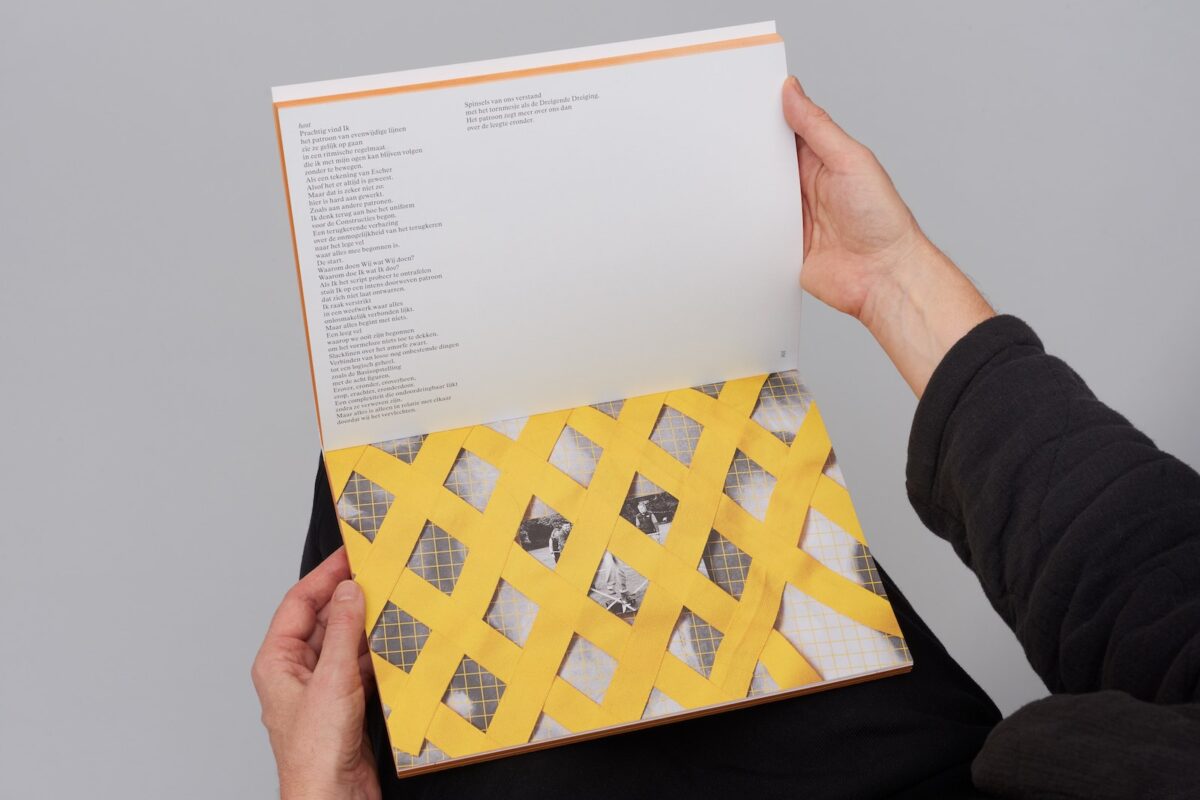
Book
Set’ Margins
photo by Andre Witkam
What work or artist has most recently surprised you?
guest
Ah. The image that appears is the intervention by Yvonne Dröge Wendel. During my book presentation of I and the Others at De Balie in Amsterdam. Six kilos of yellow wool. More than 120 pairs of hands. And at the end of the evening, sixteen metres of yellow line. Everything in my work revolves around making connection. It remains something elusive. Something you must create together. If we do nothing, there is nothing. It is the infinitely temporary in-between. The collective felting of the yellow wool that evening made it tangible.
magician
“Abracadabra: Nothing is suddenly Something.” [13]
mediator
Yes. That reminds me of something Marli Huijer said that evening: “If you do something together—like felting. And keep making the same movement together, something happens in your brain that connects you to the other. That feeling of being part of a larger whole is genuinely physical.” [14]
freelancer
Nice. No clumsy words. But shared movement. Together. Good answer.
coordinator
Check. That was the last question. We are done.
guest
Yes. Thank you. But ultimately, the role of the Faithful Spectators is to tend to the echoing words that arise after the making. We’ve made an opening move. But I’d like to close with an invitation: we’re curious about your words. After reading this, after seeing the work, and perhaps after reading the book. We hope hearing from you.
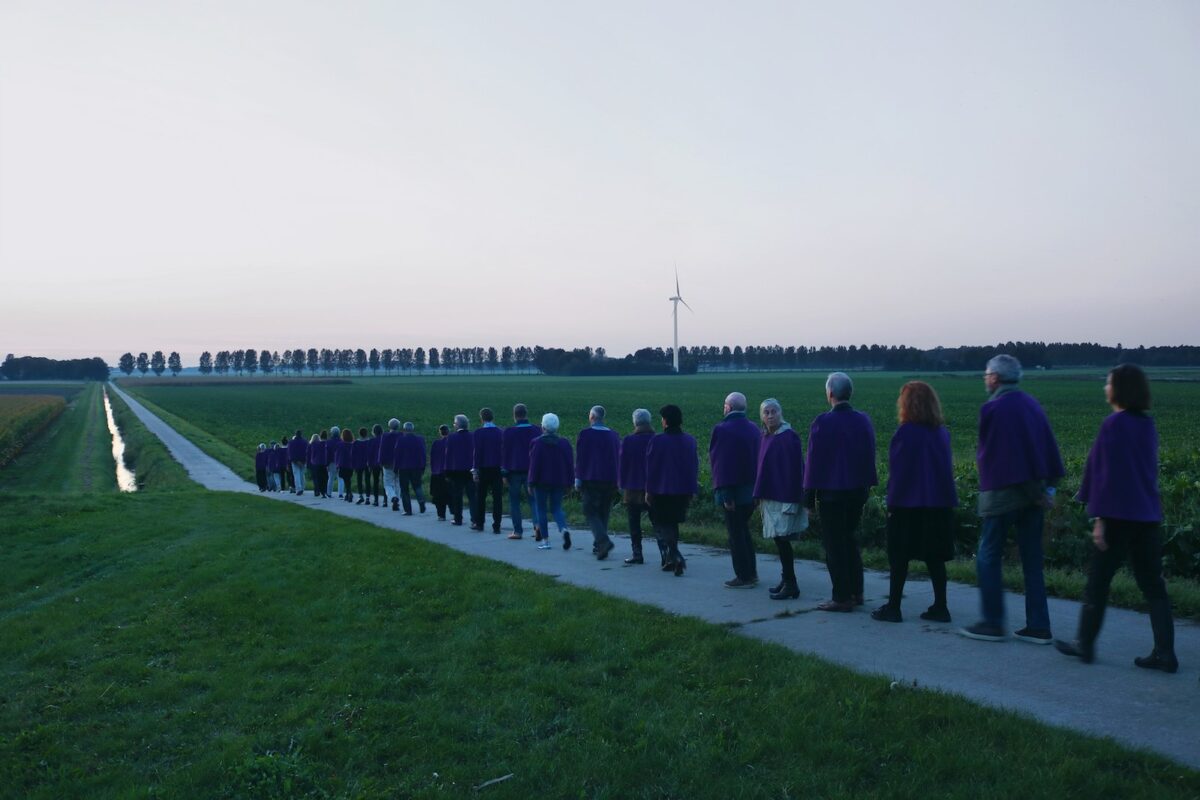
Scripted Gathering
Land Art Life
Borrowed words:
- Coppel Elsbach, A. et al. (red), Encyclopaedisch handboek van het moderne denken, Arnhem: Van Loghum Slaterus (1931), pag 122.
- Cindy Moorman, Ik en de Anderen: op zoek naar de verbindingen, translated by W. Kramer (Set’ Margins, 2026), pag 116
- Kobe Bryant, statement made during interview.
- Cindy Moorman, Ik en de Anderen: op zoek naar de verbindingen, translated by W. Kramer (Set’ Margins, 2026), pag 4
- Marli Huijer, Ik en de Anderen: op zoek naar de verbindingen, translated by W. Kramer (Set’ Margins, 2026), pag 1
- Cindy Moorman, Ik en de Anderen: op zoek naar de verbindingen, translated by W. Kramer (Set’ Margins, 2026), pag 1
- Cindy Moorman, Ik en de Anderen: op zoek naar de verbindingen, translated by W. Kramer (Set’ Margins, 2026), pag 1
- Cindy Moorman, Ik en de Anderen: op zoek naar de verbindingen, translated by W. Kramer (Set’ Margins, 2026), pag 136
- Cindy Moorman, Ik en de Anderen: op zoek naar de verbindingen, translated by W. Kramer (Set’ Margins, 2026), pag 36
- Cindy Moorman, Ik en de Anderen: op zoek naar de verbindingen, translated by W. Kramer (Set’ Margins, 2026), pag 42
- Cindy Moorman, Ik en de Anderen: op zoek naar de verbindingen, translated by W. Kramer (Set’ Margins, 2026), pag 52
- Cindy Moorman, Ik en de Anderen: op zoek naar de verbindingen, translated by W. Kramer (Set’ Margins, 2026), pag 96
- Cindy Moorman, Ik en de Anderen: op zoek naar de verbindingen, translated by W. Kramer (Set’ Margins, 2026), pag 104
- Marli Huijer, statement made during book presentation I and the Others, 2025
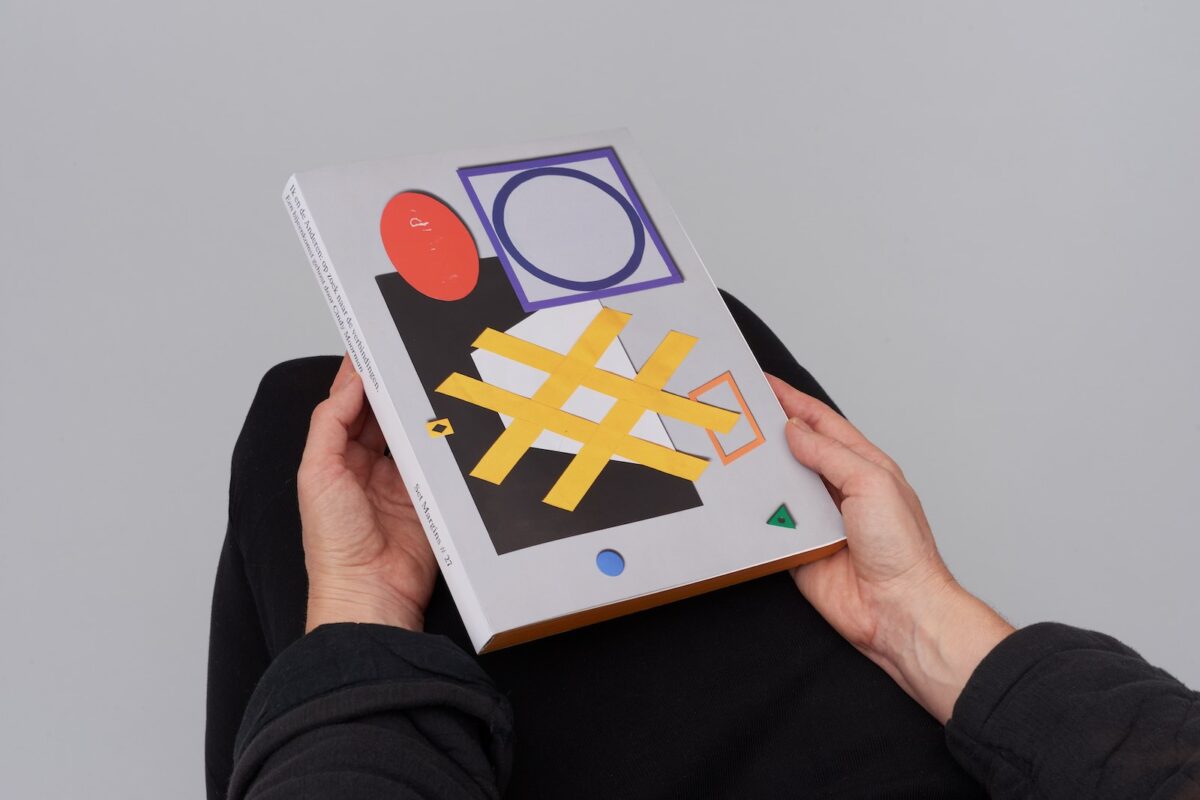
Book
Set’ Margins
photo by Andre Witkam
The book I and the Others: looking for the connections is available here.